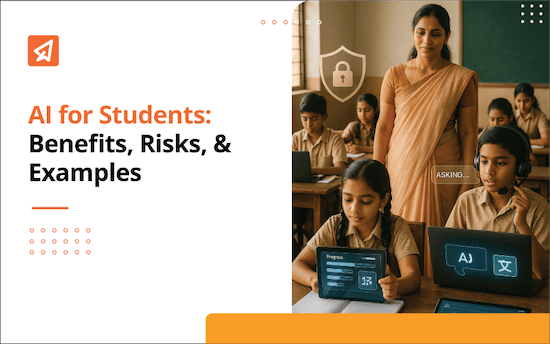
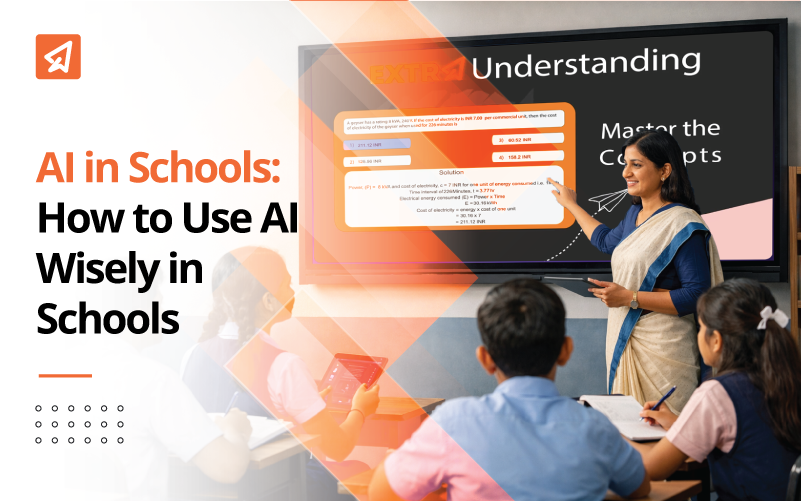
While AI adoption has increased in Indian schools, it’s important to understand how to handle it responsibly to enhance data protection, prevent misuse, and promote ethical learning. Without clear guidance, AI can create confusion and risks instead of improving learning outcomes. Common Concerns of Using AI in Schools Indian classrooms
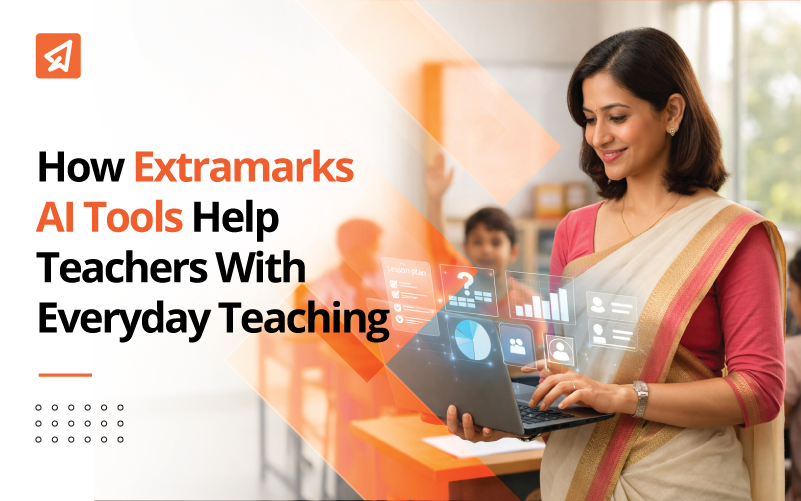
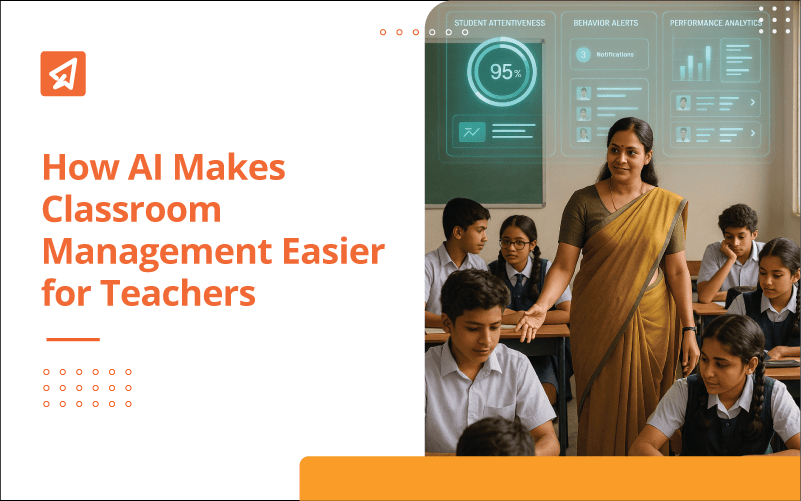
Apart from classroom management, teaching also involves balancing lesson planning, assessments, student engagement, and student support, often within a limited time. And this is where Extramarks ExtraAI makes a real difference. Designed for practical classroom use, Extramarks AI tools help teachers integrate AI into everyday teaching without disrupting their existing
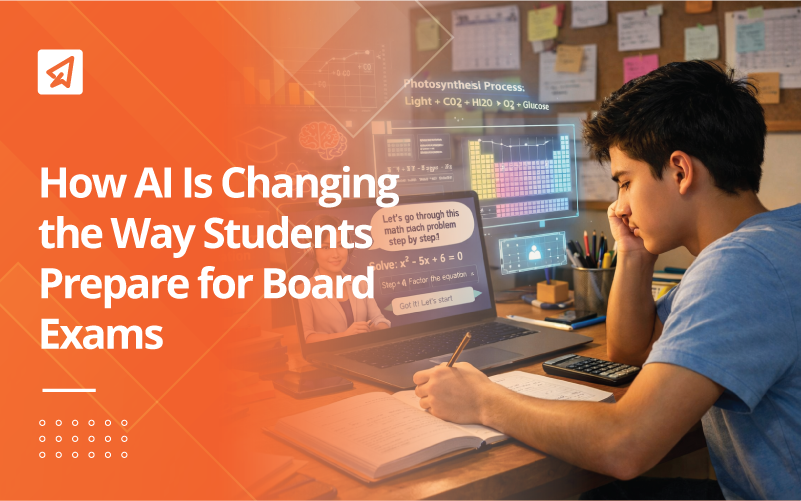
Preparing for board exams has always been a high-pressure journey for students. Long hours of textbook reading, endless practice papers, and last-minute revisions are all too familiar. But now, with AI tools becoming more common in education, that process is starting to shift. From personalised study plans to instant feedback
With 87% of Indian enterprises now using AI tools, the education sector is quickly catching up. From digital classrooms to smart grading systems, AI is becoming a regular part of how schools and teachers work. One area where it’s making a big difference is assessment. If you’ve ever felt buried
Classroom management can feel like putting out fires all day. One minute you’re helping a student understand a topic, and the next, you’re handling off-task behaviour or calming down a noisy group. It takes patience, timing, and a whole lot of energy. That’s where AI prompts can step in. You
62% of Indian educators currently use generative AI tools for lesson planning, student feedback, and resource creation. If you’re not already exploring AI in your teaching routine, you might be missing out on something big. Planning lessons that are fast, aligned with standards, and still rich in pedagogy and differentiation
AI in education refers to the use of artificial intelligence technologies such as machine learning, data analytics, and natural language processing to improve teaching, learning, and school management. It supports personalized learning, automates tasks like grading and attendance, and gives teachers data-driven insights to plan better lessons and make informed decisions.
AI is used in many ways across classrooms and learning platforms. It helps teachers personalise lessons, design adaptive study plans, and give instant feedback. AI systems can also check assignments, track student progress, and suggest resources based on how each learner performs. For schools, AI tools help manage timetables, attendance, and communication, saving teachers time so they can focus more on teaching and student growth.
In future, AI will assist teachers with planning, grading, and providing personalised guidance to students. It will help create adaptive learning environments where lessons adjust based on student progress. In India, this vision matches the goals of NEP 2020, which focuses on flexible and skill-based education. AI will continue to play a role in building future-ready classrooms while ensuring teachers stay at the heart of learning.
In India, the use of AI in education is guided mainly by the National Education Policy 2020, which encourages digital learning and skill-based education. The policy highlights integrating AI into school curriculums and teacher training programs to promote digital literacy and innovation. Along with NEP 2020, national initiatives like Digital India and NITI Aayog’s AI strategy focus on building AI-friendly classrooms that prepare students for a tech-driven future.
Before bringing AI into the classroom schools need to think about a few important issues. These include how student data will be kept private and secure, whether the technology is fair and unbiased, and whether all students will have equal access. Schools also need to consider the cost of AI tools and whether they might reduce students’ chances to build skills like critical thinking and creativity. Teachers will need proper training, and there should be clear policies in place to guide ethical use and avoid over-reliance on technology.
No, AI is not here to replace teachers. Instead, it is meant to support them. AI can take care of repetitive tasks like grading or attendance and help personalise lessons for each student. This gives teachers more time to focus on things that only humans can do, like guiding discussions, building student confidence, and supporting emotional growth. Teachers will still be at the heart of the classroom experience.
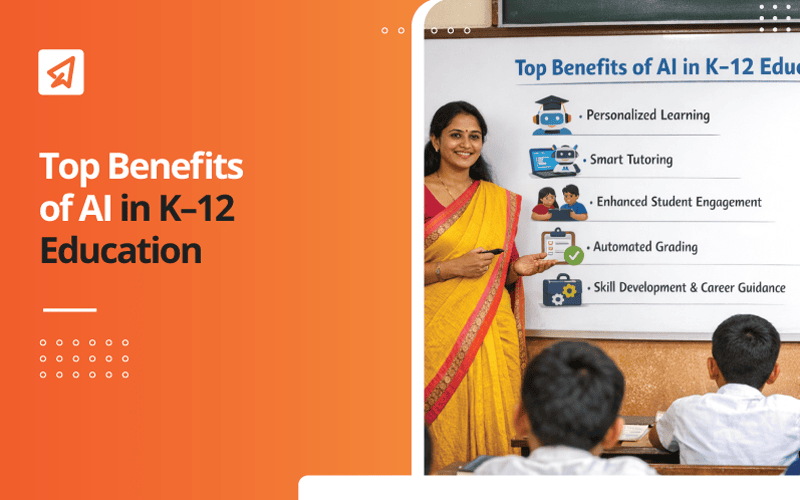
AI plays an important role in making education more inclusive, engaging, and efficient. It gives students personalized support so they can learn at their own speed. Teachers get more time to focus on classroom interaction. AI tools can translate content, support multiple languages, and assist learners with special needs. For educators, it also provides valuable data to understand each student’s learning pattern, making teaching decisions more accurate and impactful.
Examples of AI in education include platforms like Extramarks that adjust lessons based on how students learn. Other examples are automated grading tools, AI-powered chatbots for student support, and virtual tutors that provide one-on-one help. Teachers also use AI to create quizzes, track attendance, and find learning gaps. For students with disabilities, AI offers assistive tools like text-to-speech or voice recognition to make learning more accessible.
AI helps make learning more inclusive by adjusting content to suit different learning needs. It can provide real-time translations, captions, or simplified versions of text for students who need extra help. For students with disabilities, AI offers assistive tools like screen readers or voice-based instructions. It also helps teachers spot learning difficulties early so they can adjust their teaching and provide the right support. This helps create a classroom where every student feels seen and supported.
To become AI-ready, a school should start with a clear plan. This means setting goals, creating policies, and making sure the right infrastructure is in place. Schools should invest in training teachers and students to understand how AI works and how to use it responsibly. Adding AI literacy to the curriculum is another important step. Finally, schools need to ensure their data systems are secure and able to support AI tools without risking student privacy or safety.
AI redefines learning through intelligent systems that personalise teaching, analyse student progress, and create equitable access to digital education. AI in education can also be utilised to run other functions of a school such as training, admissions, attendance, communication, etc.
AI tools empower students with personalised learning, instant feedback, and skill-based assessments, helping K-12 learners build confidence and adapt to their diverse learning needs.
AI supports schools with smart management systems for attendance, assessments, operations, and infrastructure, enabling effective classroom management and digital transformation.
AI in NEP 2020 highlights India’s focus on integrating artificial intelligence into education to enhance personalised learning, improve assessments, and train future-ready students. It promotes AI-driven classrooms, teacher training, digital literacy, and inclusive access through technology-enabled learning.
AI-enabled smart classrooms combine artificial intelligence with digital tools to create interactive, adaptive, and data-driven learning environments. They personalise lessons, automate grading, and assist teachers with real-time insights and classroom management to improve student outcomes and make teaching more effective.
AI lesson planning involves the use of AI tools to help teachers create, customise, and optimise lessons quickly. It automates routine tasks, aligns plans with standards, and suggests personalised content, saving time and enhancing classroom creativity.
AI promotes accessibility through voice-to-text, screen readers, and translation tools that support differently-abled students, making digital learning more inclusive and equitable in diverse classrooms.
Government initiatives like NEP 2020, NCF 2022, NDEAR, and DIKSHA push the implementation of AI in K-12 education, ensuring responsible, scalable, and inclusive digital learning.
Adoption challenges like affordability, uneven digital access, limited teacher training, infrastructure gaps, and ethical concerns affect AI integration in Indian schools.
AI literacy empowers educators with foundational knowledge and practical skills to effectively use, manage, and evaluate AI-driven teaching and learning tools.
AI is used in FLN through adaptive, personalised learning tools to strengthen students’ reading, writing, and basic maths skills. It enhances engagement, addresses learning gaps, provides instant feedback, and supports teachers with lesson and resource planning to bridge early learning gaps effectively.
AI-based assessment uses artificial intelligence to automate grading, provide instant personalised feedback, and enable adaptive testing. With the help of machine learning and Natural Language Processing (NLP), it ensures faster, fairer, and more data-driven evaluations in education.
AI is used in language learning to provide personalised tutoring, real-time feedback, and adaptive lessons. It helps learners improve pronunciation, grammar, and vocabulary through interactive, conversation-based practice.
To prepare schools for AI adoption, AI-readiness should be assessed. This includes checking on infrastructure, teacher capability, and alignment with NEP-driven educational goals.
AI ethics ensures responsible use by addressing bias, fairness, data privacy, and transparency in school-based AI applications.
AI assists educators in creating adaptive, data-informed curricula aligned with NEP objectives to meet students’ diverse academic and developmental needs.
AI fosters teamwork and critical thinking by enabling group projects, peer learning, and interactive classroom collaboration through intelligent digital tools.
IoT in education integrates connected devices like sensors, smart boards, and wearables to create interactive and efficient learning spaces that enhance engagement, streamline administration, ensure safety, and enable data-driven decision-making for improved outcomes.
Generative AI in classrooms uses advanced AI models to create personalised learning materials, automate teacher tasks, and boost student creativity and engagement. It does this while supporting tailored feedback, accessible learning, and innovative lesson design.
Digital education in India is an umbrella initiative that pushes the use of AI in education. It uses technology, like online platforms, smart classrooms, and learning apps, to make learning more accessible, engaging, and flexible. It bridges learning gaps, promotes inclusivity, and prepares students for a digital future.
The integration of AI into learning management systems (LMS) makes it easier to embrace personalised, adaptive learning. It automates grading, recommends content, predicts learning gaps, and provides 24/7 virtual support for enhanced outcomes.