Elevate Webinar 2026: Transforming Classrooms with AI & Computational Thinking
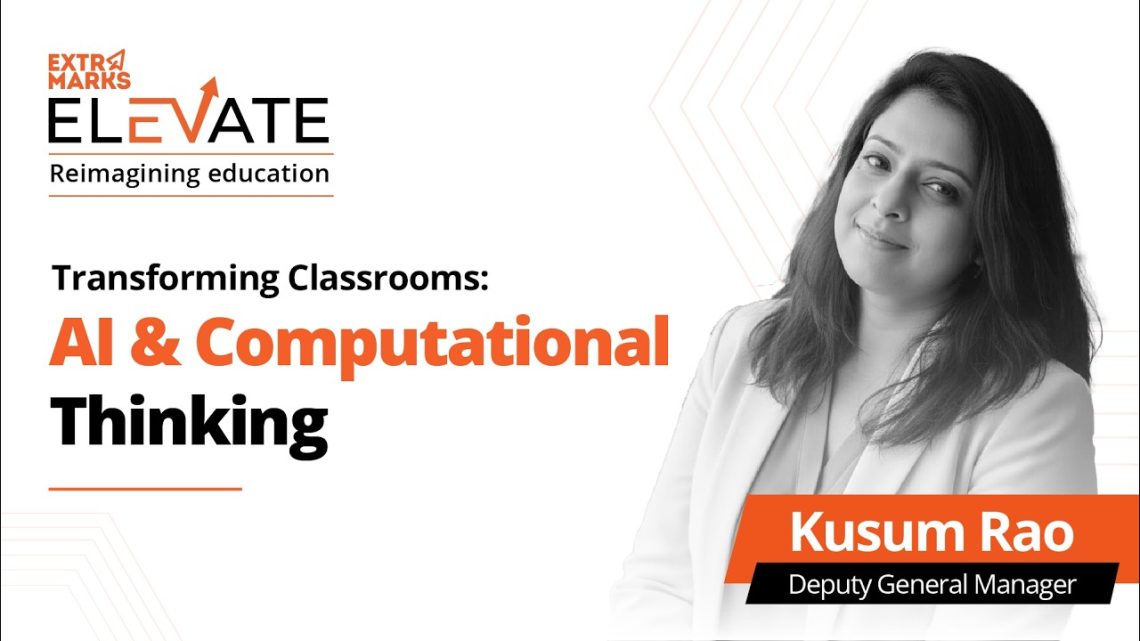
As Artificial Intelligence (AI) continues to reshape education, educators are exploring new ways to prepare students for a technology-driven future. To support this transition, Extramarks hosted an insightful session of its Elevate Webinar Series on 5 June 2026, bringing together 900+ educators from across India.
The webinar, “Transforming Classrooms: AI & Computational Thinking,” was led by Ms. Kusum Rao, who shared practical strategies for integrating computational thinking and AI into everyday teaching practices. The session focused on helping educators build future-ready skills while using technology to create more engaging learning experiences.
📹 Watch the Webinar Recording
Why Computational Thinking Matters
The session began with a discussion on the skills students will need to succeed in the future. Educators highlighted competencies such as:
- ✓ Critical Thinking
- ✓ Problem Solving
- ✓ Logical Reasoning
- ✓ Communication Skills
- ✓ Self-Learning
These skills align closely with the vision of NEP and NCF, which emphasize moving beyond memorization toward deeper conceptual understanding and real-world problem-solving.
Understanding Computational Thinking
Through interactive activities and classroom examples, participants explored the five core components of Computational Thinking:
1. Decomposition
Breaking large problems into smaller, manageable parts.
2. Pattern Recognition
Identifying trends, similarities, and relationships.
3. Abstraction
Focusing on relevant information while filtering out distractions.
4. Algorithmic Thinking
Creating step-by-step approaches to solving problems.
5. Data Analysis & Troubleshooting
Evaluating information, identifying issues, and finding solutions.
Practical Classroom Applications
One of the key takeaways from the webinar was that Computational Thinking does not require a separate subject or additional classroom time. Teachers can integrate these skills into existing subjects through:
- Mathematics problem-solving activities
- Science investigations
- Social Science case studies
- Real-world interdisciplinary projects
Examples shared during the session included planning school events, budgeting activities, and solving campus-related challenges, helping students connect learning with real-life situations.
AI as a Learning Enabler
A major focus of the webinar was understanding the role of AI in education. Ms. Rao emphasized that AI should be used to support and scale learning, not replace human thinking. Students must continue to develop critical thinking skills while using AI tools to:
- → Organize ideas
- → Visualize concepts
- → Break tasks into smaller steps
- → Explore multiple solutions
- → Receive personalized support
The session reinforced the idea that AI is most effective when combined with strong human judgment and problem-solving abilities.
AI in Action with Extramarks
The webinar concluded with a live demonstration of AI-powered features available on the Extramarks platform, including:
- ⚙️ Diagram Generation
- ⚙️ Question Builders
- ⚙️ Concept Visualization
- ⚙️ AI-powered Doubt Resolution
- ⚙️ Step-by-Step Explanations
These tools showcased how AI can help reduce teacher workload while creating more engaging and personalized learning experiences for students.
Key Takeaways
- ✅ Computational Thinking can be integrated into everyday classroom teaching.
- ✅ Critical thinking and problem-solving are essential future-ready skills.
- ✅ AI should empower learning, not replace human decision-making.
- ✅ Real-world projects provide effective opportunities for skill development.
- ✅ Educators can begin implementing many of these strategies immediately.
Conclusion
The enthusiastic participation of 900+ educators highlighted the growing interest in AI-powered teaching and future-ready learning. The session demonstrated how Computational Thinking and AI can work together to create classrooms that encourage curiosity, creativity, and deeper understanding.
Through the Elevate Webinar Series, Extramarks continues to empower educators with practical insights that bridge the gap between educational policy and classroom implementation.
Published on June 23, 2026