Modernisation of Education in India
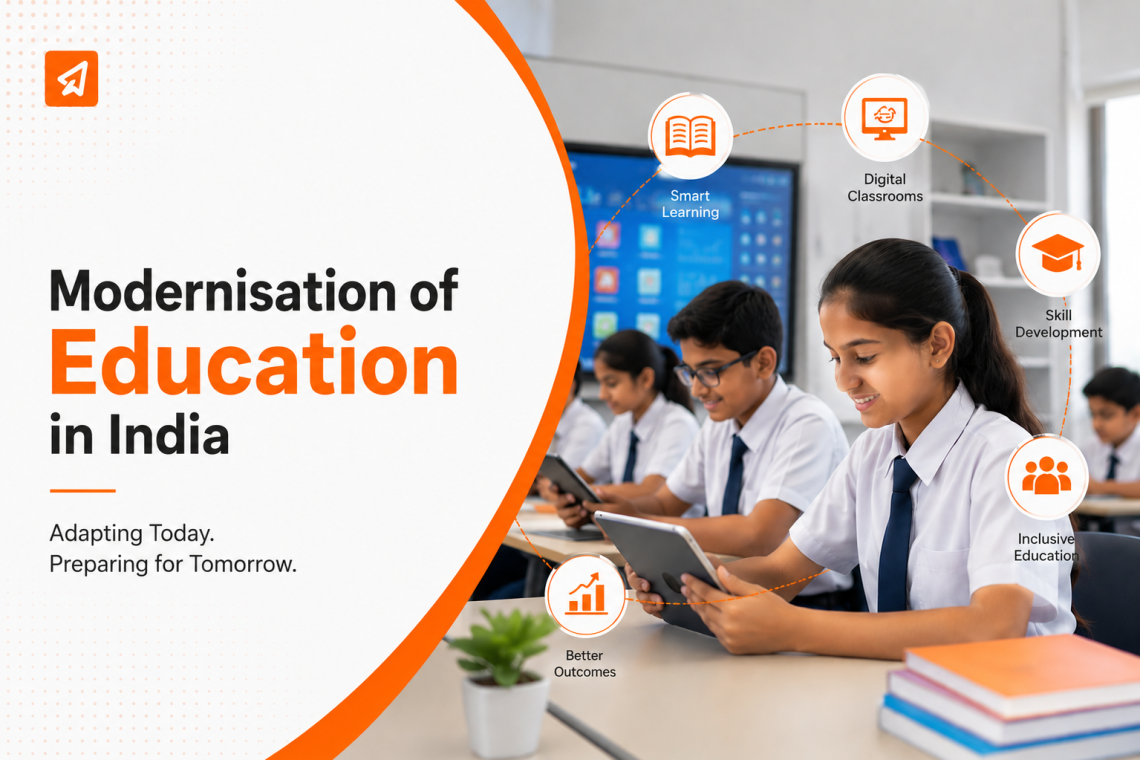
Walk into a typical classroom today and compare it with one from twenty or thirty years ago. The difference is quite noticeable. Earlier, learning mostly revolved around textbooks, lectures, and written exams. Today, many classrooms include digital screens, interactive activities, and new ways for students to explore ideas.
This shift did not happen overnight. Education systems evolve slowly as societies change. New technologies appear, new careers emerge, and the expectations from schools begin to look very different.
In India, this transformation is often described as the modernisation of education. It reflects how teaching methods, tools, and learning goals are gradually adapting to match the needs of a changing world.
What Is Modernisation in Education?
Modernisation in education refers to the gradual process of updating the systems, tools, and practices used in teaching and learning. It focuses on improving how education is delivered so that it better prepares students for present and future challenges.
This includes introducing newer teaching approaches, improving curriculum design, training teachers in modern classroom methods, and making use of technology where it helps learning. The idea is not to replace the education system entirely but to refine and improve it over time.
It is important not to confuse this with the term modern education system. Modernisation is the process of change and improvement. The modern education system is the result that emerges from those improvements.
If you want to explore how the modern Indian education system is structured and its major features today, you can read our Modern Education System in India article for a deeper explanation.
Why Modernisation in Education Is Accelerating in India
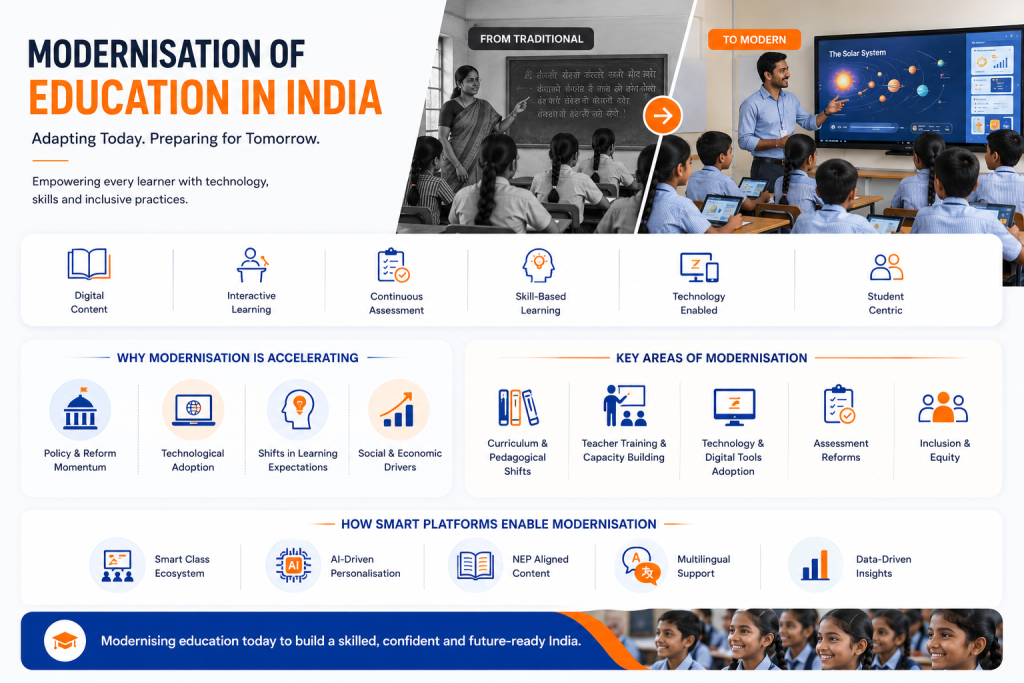
Several factors are pushing the education system to evolve faster than before. The following developments are playing an important role.
-
Policy and Reform Momentum
Educational reforms such as NEP 2020 encourage flexibility, interdisciplinary learning, and a stronger focus on understanding rather than rote memorisation. These policy changes are pushing institutions to rethink how learning is structured.
-
Technological Adoption
Digital tools, online platforms, and blended learning models are becoming more common in classrooms. These tools allow teachers to present lessons in more engaging ways and help students learn at their own pace.
-
Shifts in Learning Expectations
Today’s learners need more than textbook knowledge. Skills such as critical thinking, problem solving, creativity, and digital literacy are becoming increasingly important in a global and technology-driven economy.
-
Social and Economic Drivers
Rapid urbanisation and changing workforce demands are also influencing education. At the same time, there is growing awareness about the need to make quality education accessible across regions and communities.
Key Areas of Modernisation
Modernisation touches many parts of the education system. The following areas often receive the most attention when reforms are discussed.
-
Curriculum and Pedagogical Shifts
Modernisation encourages curriculum updates that focus on skills alongside knowledge. Instead of relying mainly on memorisation, learning now aims to develop critical thinking, creativity, and problem-solving. Lessons are increasingly connected to real-life situations so that students understand how concepts apply outside the classroom.
-
Teacher Training and Capacity Building
Teachers play a central role in any education system. As teaching methods evolve, teachers also need opportunities to learn new strategies and tools. Professional development programs and training initiatives help educators become comfortable with modern teaching approaches and classroom technologies.
-
Technology and Digital Tools Adoption
Schools are gradually integrating digital tools such as smart classrooms, multimedia learning resources, and online learning platforms. These tools make lessons more interactive and allow students to revisit topics, explore concepts visually, and learn in flexible ways.
-
Assessment Reforms
Traditional exams are slowly being complemented by continuous assessment methods. This includes projects, classroom participation, and regular feedback that helps teachers understand how well students are actually learning.
-
Inclusion and Equity
A modern education system aims to ensure that learning opportunities are available to every student. This includes addressing regional differences, supporting students with different learning needs, and improving access to quality education across rural and urban areas.
Also Read: What is Education Technology (EdTech)
How Extramarks Enables Smart Modernisation
As schools adopt modern approaches, digital platforms are playing an important role in supporting this transition. Extramarks is one such platform designed to help schools implement modern teaching and learning practices smoothly.
Here is how Extramarks contributes to smart modernisation in classrooms:
- Smart Class Ecosystem: Extramarks supports technology-enabled classrooms where teachers can combine traditional teaching with digital content. This blended approach helps lessons become more engaging and easier for students to understand.
- AI-Driven Personalisation: The platform uses adaptive learning tools that adjust content according to a student’s pace and understanding. This allows learners to receive practice and guidance that matches their individual needs.
- NEP Aligned Content and Approaches: Extramarks content and teaching frameworks are designed to align with the direction set by NEP 2020. This ensures that schools adopting the platform remain consistent with evolving education standards.
- Multilingual and Easy Deployment: Accessibility is another focus area. Extramarks supports multilingual content and can be implemented across different types of schools, helping bring modern learning tools to a wider group of students.
Closing Thoughts
Modernisation in education is not a single reform or technology upgrade. It is a gradual shift in how learning is designed, delivered, and experienced by students. As policies, teaching methods, and digital tools continue to evolve, India’s education system is moving toward a model that prepares learners for both academic success and real-world challenges.
Published on May 7, 2026