Modern Education System in India
Education in India has changed a lot over time. The modern education system began taking shape during the British colonial period, when structured schools, universities, and English-medium instruction were introduced. After independence in 1947, India gradually built its own framework through national and state education boards, curriculum reforms, and major policy changes.
Over the years, new education policies and technological developments have reshaped classrooms, moving learning beyond textbooks and exams toward skills, understanding, and real-world knowledge.
What Is the Modern Education System in India?
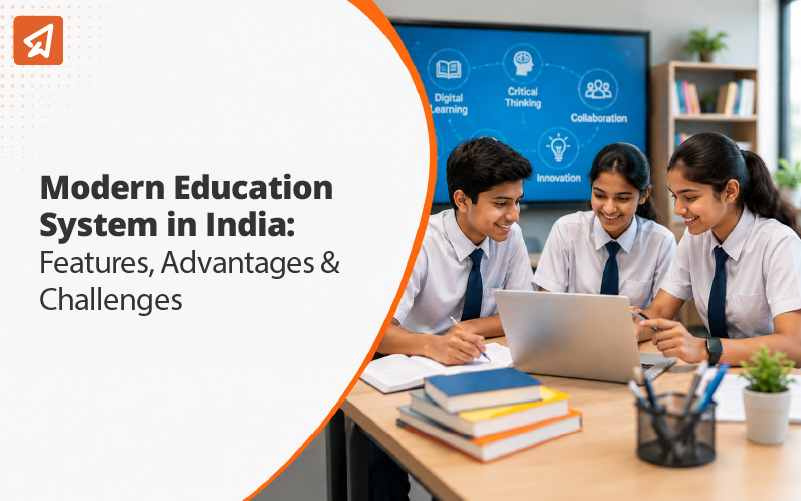
The modern education system in India refers to the current approach to schooling that focuses on conceptual understanding, practical skills, and overall student development rather than memorisation alone. It combines structured curriculum frameworks with modern teaching methods, digital tools, and skill-based learning so that students are prepared not only for exams but also for higher education, careers, and everyday life.
Key Features of the Modern Education System
Here’s a closer look at the key features of the modern education system:
-
Holistic Development and 21st Century Skills
Schools now aim to develop more than academic knowledge. Students are encouraged to build skills such as communication, problem-solving, creativity, and teamwork, which are useful in both professional and personal life.
-
Learner Centric and Flexible Approaches
Modern classrooms try to focus more on how students learn instead of only what they learn. Teachers often use discussions, projects, and activity-based learning so students can explore topics and understand them more deeply.
-
Technology Integration in Teaching and Learning
Digital tools, smart classrooms, learning apps, and online resources are becoming common in many schools. These tools help teachers present concepts visually and give students access to interactive learning materials beyond traditional textbooks.
-
Vocational and Skill Focused Learning
Many schools now introduce vocational subjects and practical training alongside academic courses. This helps students develop job-related skills and understand how classroom knowledge connects to real-world work.

Advantages of the Modern Education System
The modern education system brings in several advantages, such as:
-
Improved Engagement and Learning Outcomes
Students tend to understand concepts more clearly when learning involves activities, discussions, and real-life examples instead of only memorizing information.
-
Preparation for Future Careers and Life
Skills such as creativity, collaboration, communication, and digital awareness help students adapt to changing workplaces and everyday challenges.
-
Greater Access and Inclusivity
Education is becoming more accessible to learners from different regions and backgrounds, including rural students and girls who earlier faced limited opportunities.
-
Flexibility and Personalized Growth
Students can explore subjects based on their interests and learn at a pace that suits them instead of following a rigid one-size-fits-all structure.
-
Better Adaptation to Global and Local Needs
Modern education prepares learners to understand both global developments and local challenges so they can contribute meaningfully to society and the economy.
Challenges of the Modern Education System
-
Infrastructure Gaps
Many schools still struggle with limited facilities, a lack of digital tools, or a shortage of trained teachers, particularly in rural areas.
-
Quality and Equity Issues
There are still noticeable differences in education quality between private and government schools, and between urban and rural regions.
-
Rote Oriented Culture Persists
Even with modern reforms, exam pressure and memorization-based learning still influence many classrooms.
-
Teacher Training Challenges
Teachers often need continuous training to keep up with new teaching methods, digital platforms, and updated curriculum approaches.
-
Cost Concerns
Introducing new technologies and modern infrastructure requires investment, which can be difficult for many institutions.
Modern Trends and Innovations in Indian Classrooms
-
NEP 2020 and the 5+3+3+4 Structure
The National Education Policy 2020 introduced a new school structure that focuses on foundational learning, conceptual understanding, and flexibility across different stages of education.
-
Digital and Online Learning Tools Becoming More Common
Online platforms, digital classrooms, and educational apps are helping teachers present lessons in more interactive ways.
-
Blended Learning Approaches
Many schools are combining traditional classroom teaching with online learning resources so students can learn both inside and outside the classroom.
-
Skill-Oriented Learning Experiences
Projects, internships, and real-world problem-solving activities are becoming more common so students can connect academic concepts with practical situations.
Traditional vs Modern Education Systems
| Aspect | Traditional Education System | Modern Education System |
|---|---|---|
| Teaching Style | Teacher mostly delivers lectures while students listen and take notes. | Students take a more active role through discussions, projects, and practical learning. |
| Learning Focus | Strong focus on memorizing facts and preparing for exams. | Focus on understanding concepts, solving problems, and applying knowledge in real situations. |
| Classroom Environment | Teacher leads the class and students follow instructions. | Students participate more and learning becomes more interactive. |
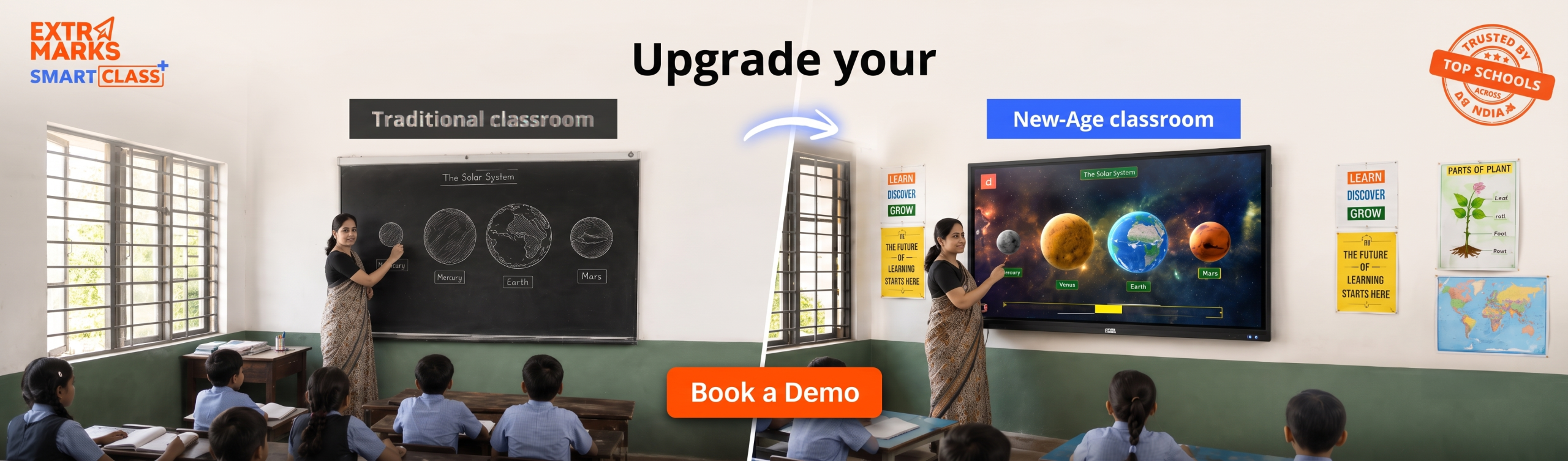
| Use of Technology | Limited use of digital tools. Most learning happens through textbooks and blackboards. | Technology such as smart classes, digital platforms, and interactive content supports learning. |
| Skill Development | Academic performance and exam scores are usually the main priority. | Equal attention is given to creativity, communication, collaboration, and critical thinking. |
| Assessment Methods | Mostly written exams and tests at the end of a term. | Continuous assessments, projects, presentations, and activity based evaluations. |
| Learning Flexibility | Fixed curriculum with limited room for customization. | More flexible learning paths that allow students to explore interests and different subjects. |
Closing Thoughts
India’s modern education system continues to evolve as the country balances traditional learning with new ideas and technologies. While challenges remain, the overall direction aims to make education more meaningful, inclusive, and connected to real life. As schools continue moving toward more flexible and student-focused learning, the right tools can make a big difference.
Platforms like Extramarks support this shift by bringing digital lessons, interactive content, and smart assessments into the classroom. This helps schools adopt modern learning practices while making it easier for students to understand concepts and stay engaged.
Last Updated on June 25, 2026