
Inclusive Education in Indian Schools: Why Every Child Deserves a Chance to Thrive
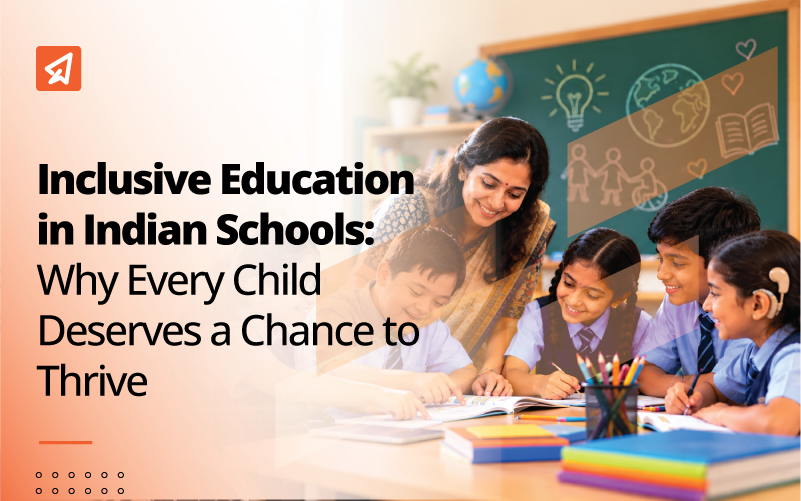
Every classroom brings together children with different strengths, interests, learning styles, and needs. Yet, education often follows a one-size-fits-all approach, expecting every student to learn and progress in the same way. Inclusive education challenges this idea. It calls on schools to create environments where every child feels valued, participates meaningfully, and gets the support they need to succeed. For school leaders and educators, the real opportunity lies in moving beyond access to education and ensuring that every learner has the opportunity to thrive.
What Does Inclusive Education Really Mean?
Inclusive education is more than bringing students with diverse abilities into the same classroom. It is about making sure that teaching methods, learning resources, classroom environments, and school policies respond to the needs of different learners.
The National Education Policy (NEP) 2020 emphasises equitable and inclusive education, recognising the importance of addressing barriers that prevent children from accessing meaningful learning opportunities.
However, inclusion cannot be achieved through policy alone. It must become part of a school’s everyday culture, from the way teachers plan lessons to how students interact with one another.
Why Inclusive Education Matters More Than Ever
Schools play a significant role in shaping how children understand differences, build relationships and view the world around them. An inclusive classroom helps students recognise that people learn differently and that these differences should be understood and respected.
It also encourages schools to reconsider how they define student success. Academic performance matters, but so do confidence, participation, independence and a sense of belonging.
Here are three important ways inclusive education can make a difference:
- Building empathy and respect: Learning alongside peers with different experiences encourages students to understand diverse perspectives and develop stronger social relationships.
- Creating opportunities for participation: Flexible teaching methods and accessible learning resources can help more students participate actively in classroom activities.
- Supporting individual progress: Recognising different learning needs allows teachers to provide appropriate support without measuring every child against the same expectations.
The benefits extend beyond students who need additional support. A classroom that encourages collaboration, flexibility and respect can create a more positive learning experience for everyone.

How Can Schools Make Inclusion a Classroom Reality?
While the idea of inclusive education is widely understood, its implementation requires thoughtful planning. School leaders must look beyond infrastructure and consider how teaching practices, assessment methods, and school culture influence a child’s experience.
A practical starting point is to focus on four areas:
- Teacher training: Equip educators to identify learning barriers, adapt teaching strategies and respond confidently to diverse classroom needs.
- Accessible infrastructure: Review classrooms, laboratories, libraries, washrooms and common areas to ensure students can participate as independently as possible.
- Flexible teaching and assessment: Use visual explanations, group activities, assistive resources, and varied assessment methods to accommodate different learning needs.
- Parent and specialist collaboration: Encourage regular communication between families, teachers, counsellors and relevant specialists to provide consistent support.
Technology can also play a meaningful role in this process. Digital learning resources, visual explanations and interactive activities can offer alternative ways for students to understand concepts. Platforms such as Extramarks can support teachers with digital content that enriches classroom instruction, helping educators introduce concepts through varied learning experiences.
However, technology is only an enabler. Its effectiveness depends on whether the resources are accessible, appropriate for the learner, and integrated thoughtfully into teaching.
The Role of School Leaders in Building Inclusive Classrooms
Creating an inclusive school requires commitment from the entire institution. Principals, academic coordinators, teachers, counsellors and parents must work towards a shared understanding of what inclusion looks like in practice.
School leaders can begin by reviewing existing policies, gathering feedback from students and parents, and identifying barriers that may prevent participation. They should also encourage teachers to share effective practices and create opportunities for ongoing professional development.
Equally important is the language schools use. Students should not be defined by their limitations or treated as problems to be solved. Every child deserves dignity, meaningful participation, and opportunities to develop their strengths.
Progress can be assessed by asking simple but important questions: Are students participating? Do they feel accepted? Can they access learning resources? Are teachers equipped to support their needs?
These questions help schools move from good intentions towards measurable, meaningful change.
Conclusion: Inclusion Begins with a Change in Mindset
Inclusive education is not a one-time initiative or a checklist to complete. It is an ongoing commitment to making schools more responsive to the children they serve.
For Indian schools, the way forward lies in combining accessible infrastructure, supportive teaching practices, appropriate technology, and a culture that values every learner. Government policies provide direction, but lasting change depends on what happens in classrooms every day.
Ultimately, an inclusive school is not one where every child is expected to learn in the same way. It is one where every child is given a fair opportunity to learn, participate and grow. And that is a standard every school should strive to achieve.
Published on October 26, 2026