Beyond Marks: How PARAKH Is Changing the Future of School Assessment in India
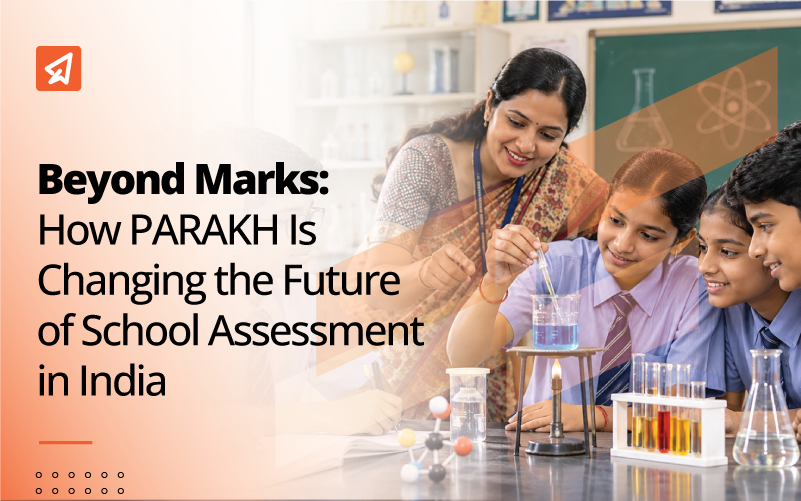
For generations, examination scores have been treated as the clearest measure of a student’s ability. A high score often signals success, while a low score can overshadow a student’s creativity, problem-solving skills and potential. But does remembering an answer necessarily mean understanding it? As India’s education system moves towards the vision of the National Education Policy (NEP) 2020, this question is becoming increasingly important. With PARAKH working to strengthen competency-based assessment, schools have an opportunity to rethink examinations and focus on what truly matters: how well students understand, apply and use what they learn.
Why Assessment Needs to Move Beyond Memorisation
Traditional examinations have often placed considerable emphasis on recalling facts, reproducing textbook answers and preparing for predictable questions. While memory remains an important part of learning, it cannot be the only measure of understanding.
NEP 2020 calls for a shift towards conceptual understanding, critical thinking and the application of knowledge in real-life situations. The National Curriculum Framework for School Education (NCF-SE) 2023 builds on this vision by emphasising assessments linked to curricular goals, competencies and learning outcomes.
For schools, this means asking a different question when evaluating students: not just what they remember, but what they can do with what they know.
Consider a simple example. A student may memorise the definition of water conservation and reproduce it perfectly in an examination. But can the student identify water wastage in their neighbourhood and suggest practical ways to reduce it? That is where understanding becomes visible.
What Is PARAKH and Why Does It Matter?
PARAKH, which stands for Performance Assessment, Review and Analysis of Knowledge for Holistic Development, is the National Assessment Centre established at NCERT to support assessment reforms.
Its role is to help translate the vision of NEP 2020 into practical assessment standards, frameworks and tools. Its work includes developing approaches that help schools and examination boards assess students more meaningfully.
One important element is the PARAKH Taxonomy, which uses three dimensions to guide assessment design:

- AwarenessCan students recall information and demonstrate basic understanding of a concept?
- SensitivityCan they interpret situations, consider different perspectives and understand the implications of an issue?
- CreativityCan they develop ideas, propose solutions and apply their knowledge to unfamiliar problems?
These dimensions encourage educators to think beyond questions that simply test memory. They can also help teachers design classroom activities and assessments that gradually develop deeper thinking.
How Can Schools Make Competency-Based Assessment Work?
Changing the examination pattern is only one part of the solution. For assessment reform to influence learning, schools must also reconsider classroom teaching, question design and how student progress is recorded.
Here are four practical steps school leaders can take:
- Design questions around real-life situationsAsk students to apply concepts to everyday problems, interpret information and explain their reasoning.
- Use different forms of assessmentCombine written tests with projects, presentations, practical activities, portfolios and classroom observations where appropriate.
- Give feedback that helps students improveExplain what a student has understood, where they are struggling and what they can do next.
- Track progress beyond final marksLook at conceptual understanding, participation, collaboration and individual growth alongside academic performance.
The Holistic Progress Card, another part of the broader assessment reform agenda, supports this wider view of learning by bringing together different forms of evidence about a student’s progress.
For teachers, these approaches can make assessment more useful as a guide to instruction. Instead of waiting until the end of a term to identify learning gaps, educators can use regular feedback to adjust lessons and provide timely support.
The Role of Technology in Smarter Assessment
Technology can help schools make this transition more practical. Digital assessments, interactive exercises and curriculum-linked question banks can give teachers additional ways to check understanding and identify areas that need attention.
Platforms such as Extramarks can support this process through digital learning resources, assessments and performance insights that help educators understand student progress. When used alongside teacher observations and classroom discussions, these tools can support more informed decisions about teaching and remediation.
However, technology alone cannot make an assessment meaningful. The quality of the questions, their alignment with learning outcomes and the way teachers use the results remain essential.
Schools must also ensure that assessments are accessible to students with diverse learning needs and provide appropriate accommodations wherever required.
Conclusion: Measure Learning, Not Just Performance
India’s assessment reforms represent an important opportunity to rethink what success looks like in school education. PARAKH’s work, alongside the direction set by NEP 2020 and NCF-SE 2023, encourages a shift towards examinations that value understanding, application, creativity and holistic development.
For school leaders, the challenge is to bring this vision into everyday classroom practice. Teachers need support in designing better questions, interpreting assessment results and helping students learn from their mistakes.
Ultimately, examinations should do more than tell us how many marks a student has scored. They should help us understand what the student has learnt, what they can apply and where they need support.
The real measure of educational success is not how much students can remember for an examination, but how confidently they can use their learning beyond it.
Published on November 16, 2026