9 Best Classroom Seating Arrangement Ideas: Types & Common Challenges
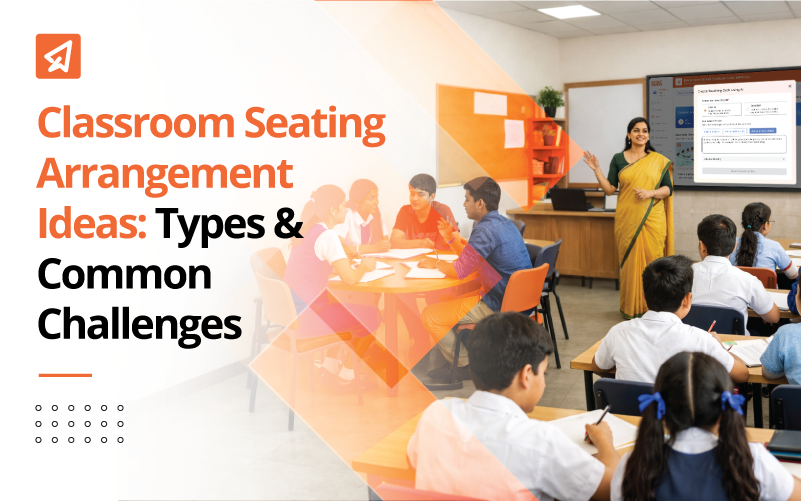
A well-planned classroom seating arrangement does more than just organise desks. It directly influences how students focus, interact, and learn throughout the day. It is important for teachers to understand how these arrangements overall affect the productivity of the classroom.
Key Takeaways:

- Your classroom seating arrangements affect how students focus, participate, and behave in the classroom.
- Different teaching goals require different seating arrangements in the classroom rather than a one-size-fits-all layout.
- Choosing the best classroom seating arrangement depends on the size of your class, student needs, and instructional style.
- Thoughtful planning helps teachers understand how to make seating arrangements in classroom settings more effective and inclusive.
What Is a Classroom Seating Arrangement?
A classroom seating arrangement refers to the intentional layout of desks, chairs, and learning spaces within a classroom to support teaching, learning, and classroom management. It determines where students sit, how they interact with peers, and how easily teachers can move, observe, and engage with the class. Modern classrooms often combine traditional layouts with flexible designs to support different learning activities and student needs.
Related Read: Classroom Environment
What Is the Importance of Seating Arrangement in Classrooms?
The seating arrangement is intentionally designed because it directly affects the learning quality.
- It improves student attention and visibility during instruction.
- It encourages participation and meaningful peer interaction.
- It supports classroom discipline and behaviour management.
- It accommodates diverse learning needs and accessibility requirements.
- When done right, it also aligns with teaching methods and strategies, along with lesson goals.
9 Best Classroom Seating Arrangements
Choosing the best classroom seating arrangement depends on how you want students to learn, interact, and stay focused. Different layouts support different teaching styles, learning activities, and classroom dynamics. Below are the most effective ones:
-
Traditional Rows
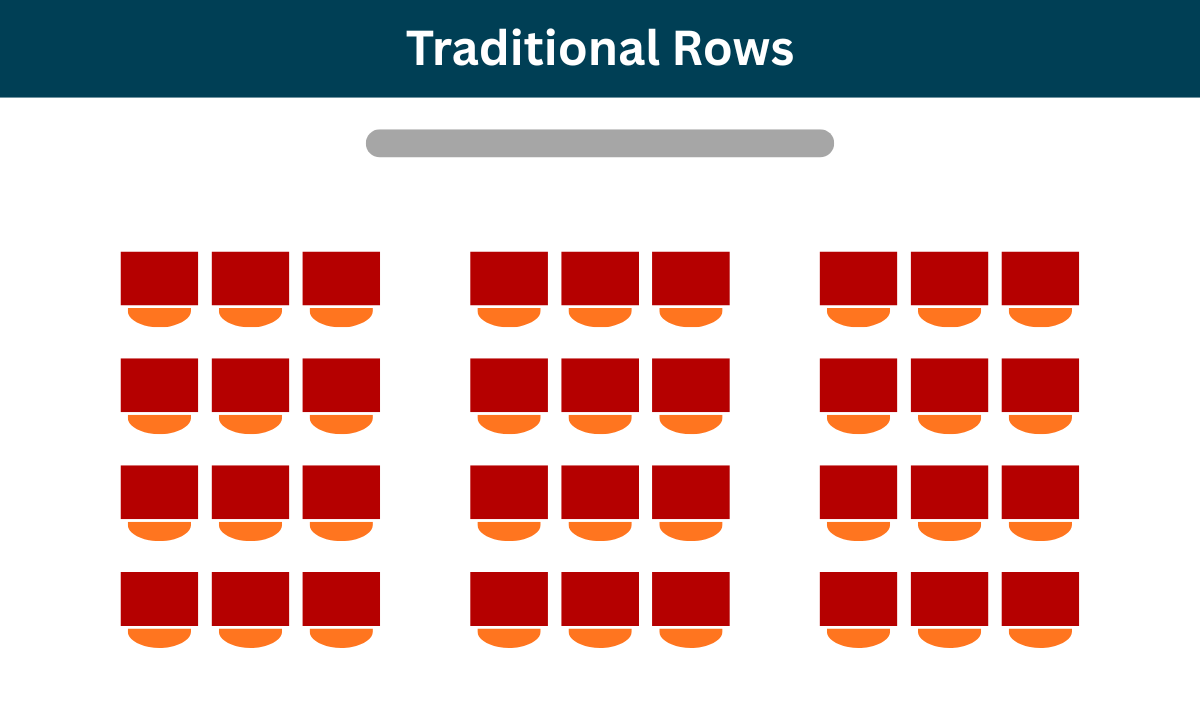
In this classroom seating arrangement, desks are placed in straight rows facing the teacher and board. This is the most commonly used layout in Indian classrooms and follows a teacher-centred instructional approach.
Pros:
- Minimises distractions and side conversations
- Makes classroom monitoring and discipline easier
- Ensures clear visibility of the board for all students
Cons:
- Limits peer interaction and collaboration
- Encourages passive learning if used continuously
Best for: Lectures, examinations, individual work, and theory-heavy subjects where focus and structure are essential.
-
Horseshoe (U-Shape) Arrangement
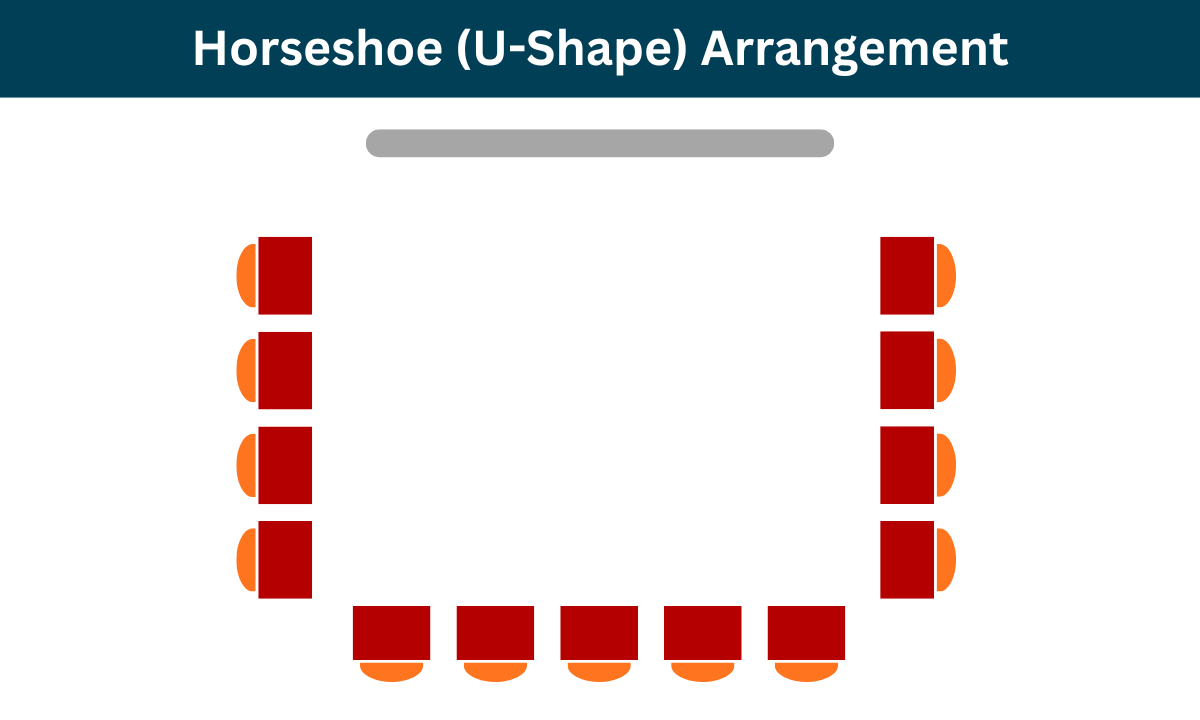
Here, the desks are arranged in a U-shape with an open centre, allowing students to face both the teacher and each other. This layout promotes visibility and interaction.
Pros:
- Encourages discussion and student participation
- Allows teachers to move freely and engage closely with students
- Improves eye contact and classroom communication
Cons:
- Requires more classroom space
- May not suit large class sizes
Best for: Discussions, demonstrations, debates, and interactive teaching sessions.
-
Clusters or Pods (Group Seating)
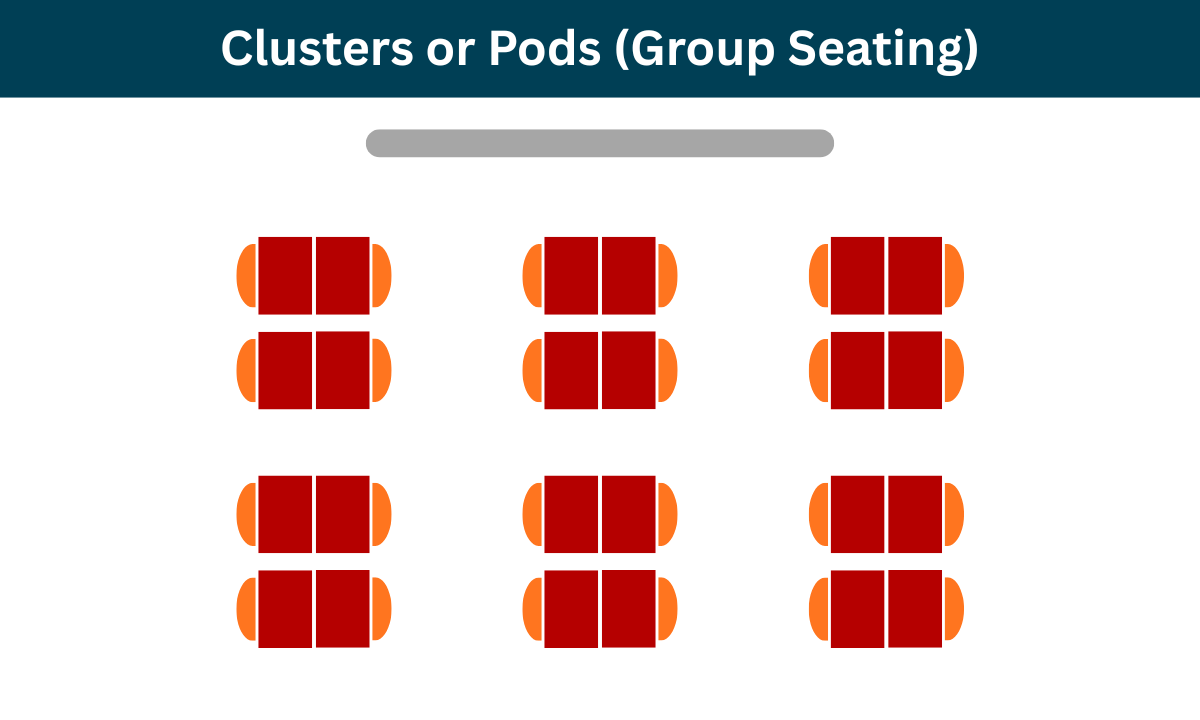
In this layout, the desks are grouped into small clusters, usually seating four to six students together. It is one of the most popular classroom seating arrangements for collaborative learning.
Pros:
- Promotes teamwork, peer learning, and collaboration
- Supports activity-based and project-based learning
- Encourages communication and problem-solving skills
Cons:
- Can lead to noise if not well managed
- May distract students who struggle with focus
Best for: Group projects, collaborative activities, and inquiry-based learning.
-
Partner Seating
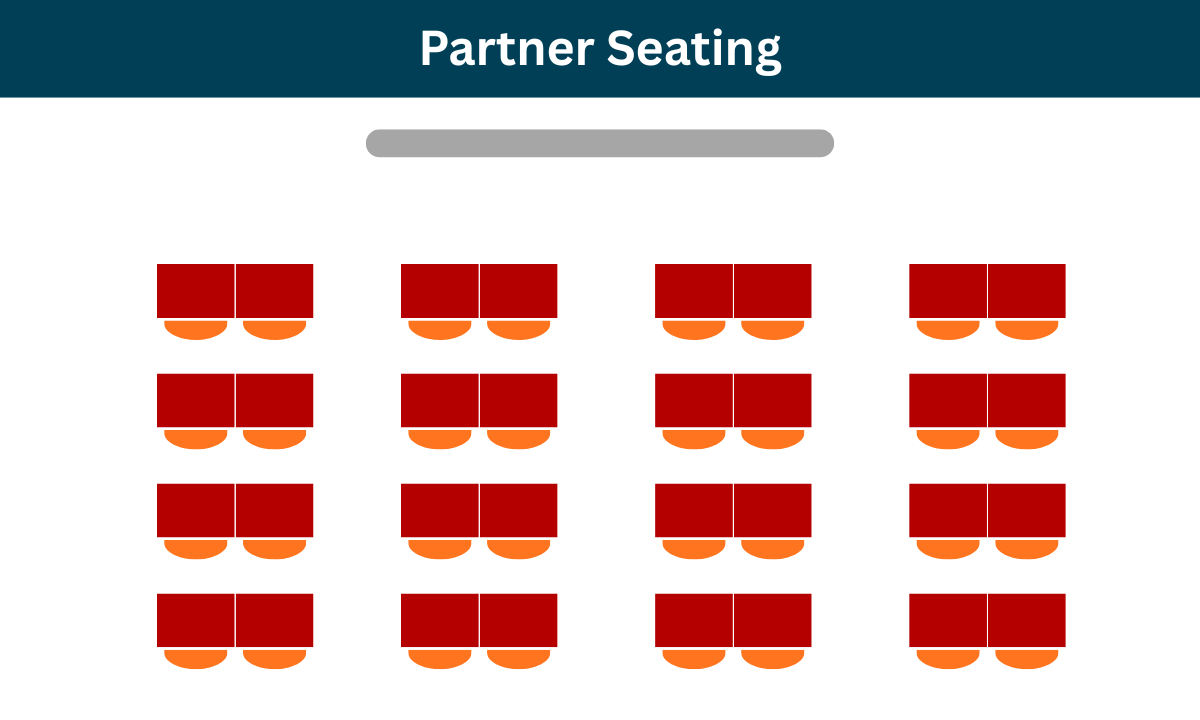
Students sit in pairs, either side by side or facing forward together. This layout balances structure with collaboration.
Pros:
- Encourages peer support and cooperative learning
- Easier to manage than larger group seating
- Works well for paired discussions and practice
Cons:
- Requires thoughtful pairing to avoid distractions
- Limited interaction beyond pairs
Best for: Paired reading, peer review, and practice exercises.
-
Circle or Semi-Circle Seating
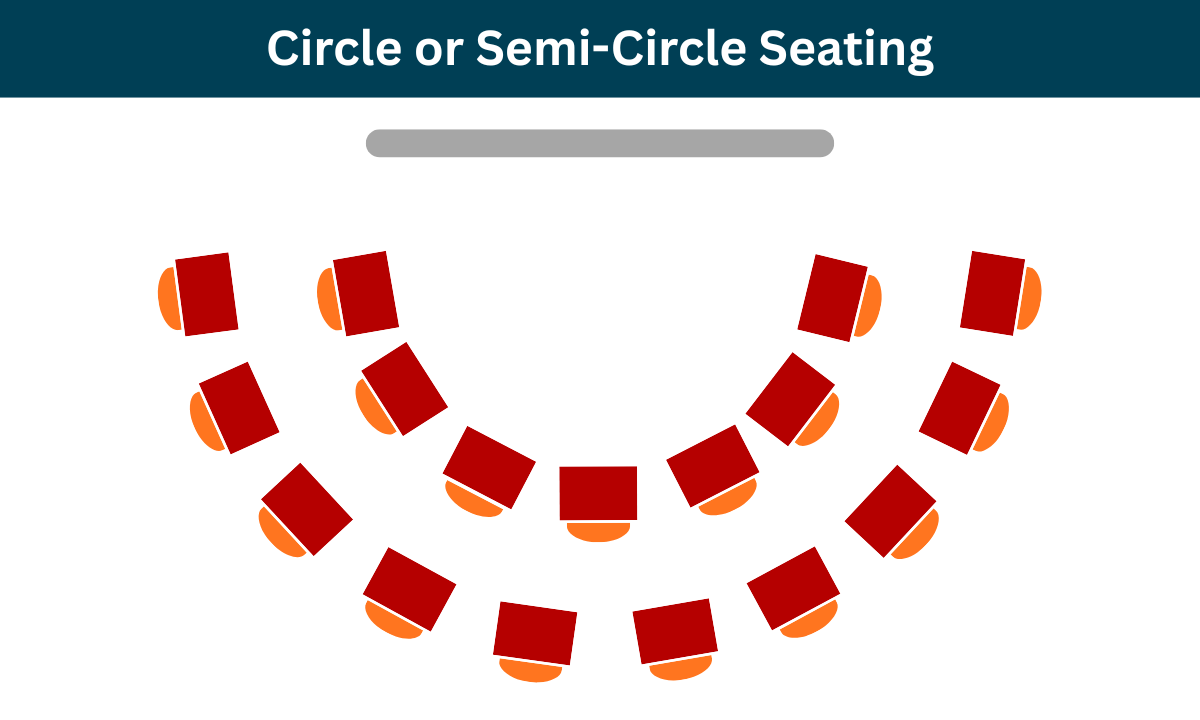
In this seating arrangement, chairs or desks are arranged in a full or partial circle, allowing all students to face one another.
Pros:
- Promotes equal participation and open dialogue
- Builds a sense of community and inclusion
- Reduces hierarchy between the teacher and students
Cons:
- Limited desk space for writing
- Not suitable for note-heavy lessons
Best for: Discussions, storytelling, social-emotional learning, and reflection activities.
-
Double U-Shape Arrangement
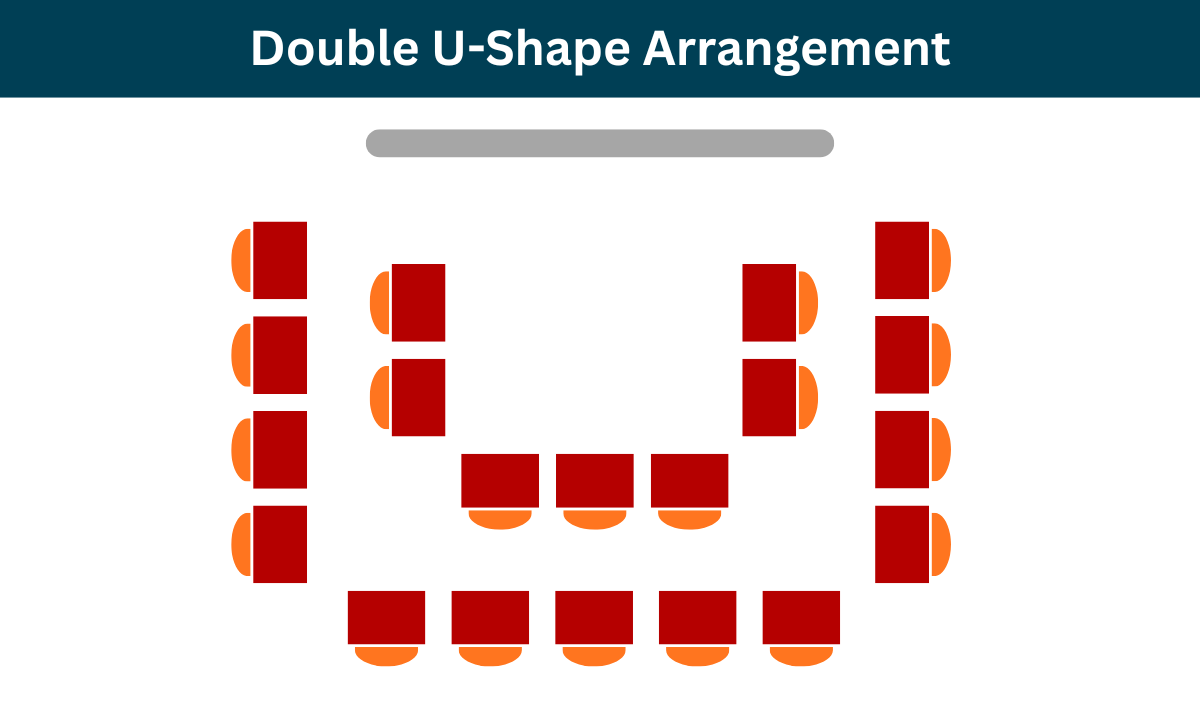
This layout uses two U-shaped arrangements, one inside the other, making it suitable for larger classrooms.
Pros:
- Maintains discussion-friendly structure in bigger classes
- Improves visibility and access for the teacher
- Supports interactive instruction
Cons:
- Requires careful spacing and planning
- Needs wider classrooms
Best for: Large group discussions and interactive lectures.
-
Parallel Rows Facing Each Other
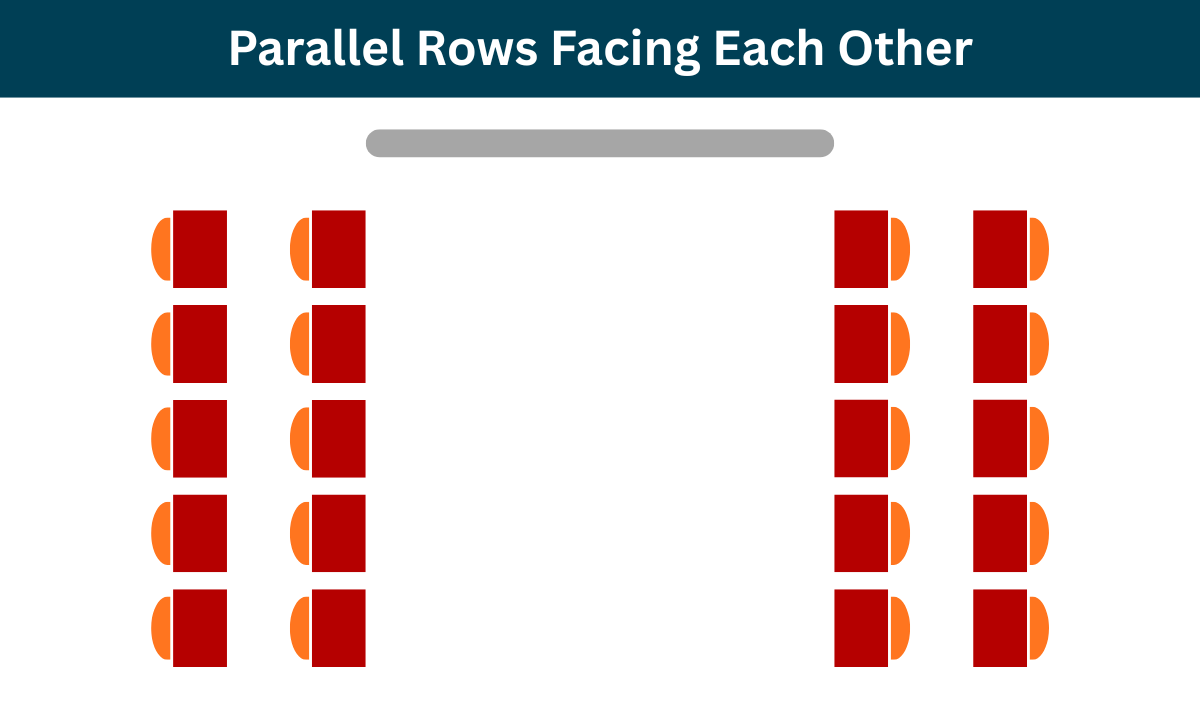
Here, the desks are arranged in two sets of rows facing each other, separated by an aisle.
Pros:
- Encourages debate and face-to-face interaction
- Supports peer discussion and oral activities
Cons:
- Can distract students who struggle with self-regulation
- Requires strong classroom management
Best for: Language learning, debates, and discussion-based lessons.
-
Combination Layout
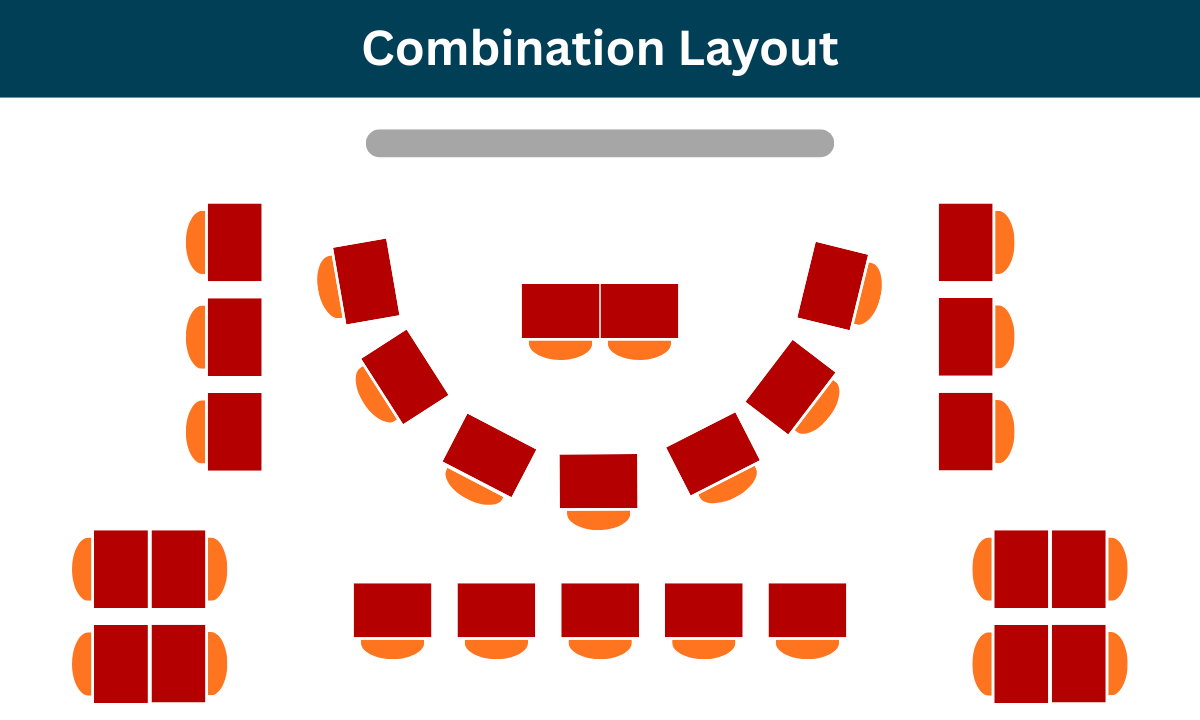
This classroom seating arrangement is a flexible layout that combines rows, clusters, and open spaces within the same classroom.
Pros:
- Adapts easily to multiple teaching methods
- Supports varied learning activities in one session
- Works well for mixed-ability classrooms
Cons:
- Requires planning and clear expectations
- Can feel disorganised without structure
Best for: Blended learning environments and classrooms with diverse instructional needs.
-
Stadium Seating
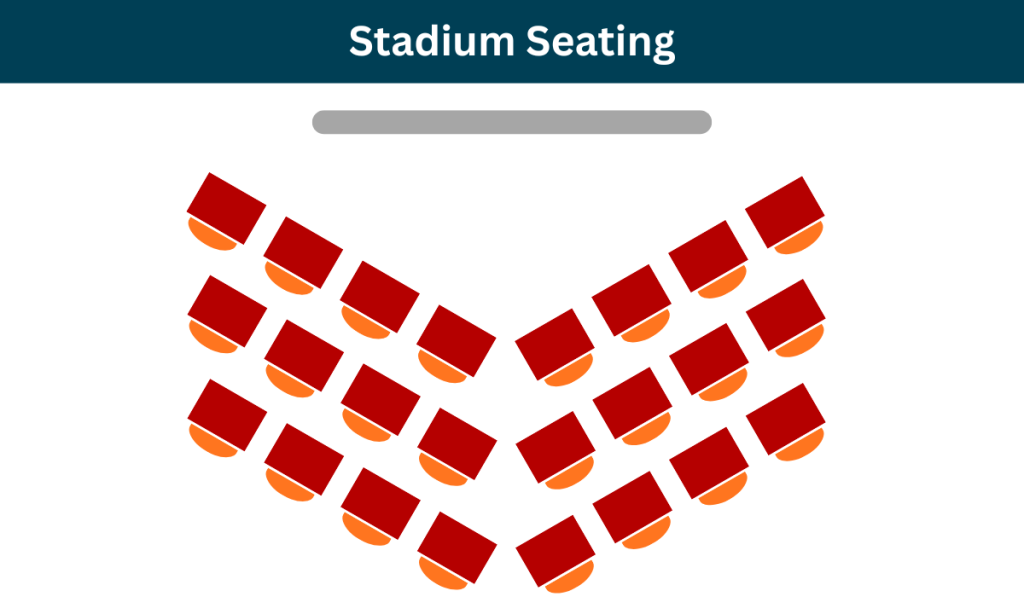
Seats are arranged in tiered rows, similar to an auditorium, ensuring clear visibility for all students.Pros:
- Excellent visibility of the board or demonstration area
- Reduces obstruction in large classrooms
Cons:
- Limited interaction and movement
- Not suitable for collaborative activities
Best for: Presentations, demonstrations, and large-group instruction.
What to Consider When Planning a Classroom Seating Arrangement
Planning proper classroom seating arrangements requires balancing structure with flexibility. It’s necessary to consider the following factors:
- Classroom size & shape: The physical dimensions determine feasible layouts.
- Number of students: Seating must allow comfort and movement.
- Teaching style: The layout should align with teaching methods and strategies.
- Student needs: Consider behavioural, academic, and accessibility requirements.
- Flexibility: Seating should adapt to different activities.
- Technology access: Layout must support digital tools and smart boards.
- Traffic flow: Clear pathways reduce disruption.
- Inclusion: Seating should support equitable participation for all learners.
How to Arrange Classroom Seats?
Knowing how to make a proper seating arrangement in classroom settings requires a structured approach.
Step 1: Define Your Teaching Objective
Start by identifying what you want students to achieve during lessons, such as focused listening, group collaboration, or discussion-based learning. Your teaching goal will directly influence whether rows, clusters, or flexible seating works best.
Step 2: Assess Classroom Size & Space
Measure the available floor space and observe the room’s shape. This helps you avoid overcrowding so that students can move without disruptions.
Step 3: Count Students & Available Furniture
Take stock of the total number of students, desks, chairs, and any additional furniture in the room. A realistic understanding of capacity ensures that your classroom seating arrangement remains functional and safe.
Step 4: Choose a Seating Arrangement That Matches Your Goals
Select from the different seating arrangements in the classroom, such as rows for exams or clusters for collaborative tasks. The arrangement should support both the lesson format and student interaction needs.
Step 5: Plan the Layout on Paper or Digitally
Sketch the seating layout on paper or use a digital classroom planner to visualise spacing and walkways. This step helps identify potential bottlenecks before physically moving furniture.
Step 6: Set Up the Classroom Physically
Arrange desks and chairs according to the planned layout, ensuring clear visibility of the board and teacher movement paths. Maintain enough space between rows or groups to prevent congestion.
Step 7: Assign or Label Seats Thoughtfully
Assign seats based on learning needs, behaviour patterns, or peer dynamics where necessary. Clear labelling reduces confusion and helps students settle quickly into routines.
Step 8: Review & Adjust Regularly
Observe how students respond to the seating plan during lessons and make changes when required. Flexible adjustments ensure continuous support for your learning outcomes.
How Does Classroom Seating Arrangement Affect Learning?
The effects of seating arrangement in classroom environments are measurable and significant.
- Attention & focus: Strategic seating reduces distractions.
- Student participation: Layouts influence who speaks and engages.
- Peer interaction: Seating affects collaboration quality.
- Classroom behaviour: Structured layouts improve discipline.
- Academic performance: Better engagement leads to stronger outcomes.
Common Challenges in Classroom Seating Arrangements
When applied in real-world classroom environments, even the best planned classroom seating arrangements can face difficulties. Understanding these challenges allows teachers to proactively adjust seating plans and maintain productive learning environments.
-
Space Constraints
Challenge: Narrow classrooms, large class sizes, and immovable furniture often restrict the use of flexible or collaborative seating. As a result, teachers may struggle to implement the best classroom seating arrangement for different learning activities.
Solutions:
- Use compact desks and benches that maximise seating capacity without overcrowding the classroom.
- Choose seating layouts such as partner seating or narrow clusters that fit within restricted spaces.
- Maintain clear walkways to allow smooth movement for teachers and students.
- Avoid unnecessary furniture that reduces usable teaching space.
- Prioritise seating arrangements that balance comfort with visibility rather than forcing complex designs
-
Disruptions from Frequent Changes
Challenge: Frequent changes in classroom seating arrangements can disturb classroom routines and reduce learning continuity. Some students take longer to adapt to new seating, which can affect their focus, behaviour, and lesson flow. Constant rearrangement may also increase classroom management challenges for teachers.
Solution:
- Change seating arrangements only when learning objectives clearly require it.
- Explain the purpose of each seating change so students understand its relevance.
- Maintain one primary layout and make minor adjustments instead of full rearrangements.
- Schedule seating changes at natural transition points, such as new units or terms.
- Observe student behaviour after changes and revert if disruptions increase.
- Set clear behavioural expectations whenever a new seating plan is introduced.
-
Accessibility Challenges
Challenge: Not all seating arrangements support students with physical, visual, or learning needs. When not thought carefully, a poor seating structure can limit board visibility or restrict student movement. This can unintentionally exclude students who require additional support.
Solution:
- Reserve front seating for students needing visual or auditory support.
- Ensure adequate spacing for students using mobility aids or requiring extra movement space.
- Regularly review seating arrangements to accommodate changing student needs.
- Avoid fixed seating for students who benefit from flexible positioning.
- Consult with special educators when planning inclusive seating layouts.
- Adjust seating arrangements during the year as learning or behavioural needs evolve.
-
Technology Limitations
Challenge: If you do not plan properly, smart or digitally enabled classrooms may suffer from poor seating alignment issues, limiting student visibility of screens or boards. Audio clarity may also suffer if seating blocks speakers or microphones. These issues can reduce classroom engagement.
Solution:
- Arrange desks in a way that all students have a clear line of sight to the smart board or display.
- Avoid seating layouts that block speakers, screens, or interactive panels.
- Test visibility and audio clarity from different seating positions before finalising the layout.
- Adjust screen height or seating angles where possible.
- Reconfigure seating when digital tools or content formats change.
-
Furniture Wear & Maintenance
Challenge: Frequent movement of desks and chairs can lead to damaged furniture, loose fittings, and safety risks. Over time, this increases maintenance costs. Poor-quality furniture may also limit how often seating arrangements can be changed.
Solution:
- Use durable, lightweight furniture designed for frequent movement.
- Instruct students to move desks and chairs carefully and responsibly.
- Schedule regular checks to identify loose or damaged furniture early.
- Limit unnecessary rearrangements that increase wear and tear.
- Involve school maintenance teams in long-term seating planning.
- Replace damaged furniture promptly to avoid safety concerns.
-
Balancing Structure & Flexibility
Challenge: Highly rigid seating arrangements can make student collaboration a challenge, while overly flexible layouts may reduce focus and discipline among students. Finding the right balance between structure and flexibility is a common challenge for teachers managing diverse learning needs and classroom behaviour.
Solution:
- Use combination seating layouts that support both independent work and collaboration.
- Clearly define classroom rules for behaviour based on the chosen seating plan.
- Adjust seating gradually instead of making drastic changes.
- Match seating arrangements with specific lesson objectives.
- Follow structured layouts for assessments and flexible ones for activities.
- Regularly evaluate whether the seating plan supports learning outcomes effectively.
Related Read: Smart Classrooms
Conclusion
A thoughtfully planned classroom seating arrangement plays a vital role in shaping student behaviour, engagement, and academic performance. By understanding your options, evaluating classroom needs, and adapting layouts over time, teachers can create learning spaces that are structured, inclusive, and effective.
Frequently Asked Questions About Classroom Seating Arrangement
How can seating plans support students with attention or behavioural challenges?
Strategic seating near the teacher and away from distractions helps students stay focused and engaged.
What role does classroom size play in choosing a seating layout?
The classroom size plays a major role in choosing a seating layout as it determines movement space, visibility, and feasible seating styles.
What is the most effective seating arrangement for mixed-ability classrooms?
For mixed-ability classrooms, combination layouts work best, as they balance structure with collaboration and flexibility.
Published on February 11, 2026