What is STARS: Strengthening Teaching-Learning and Results for States
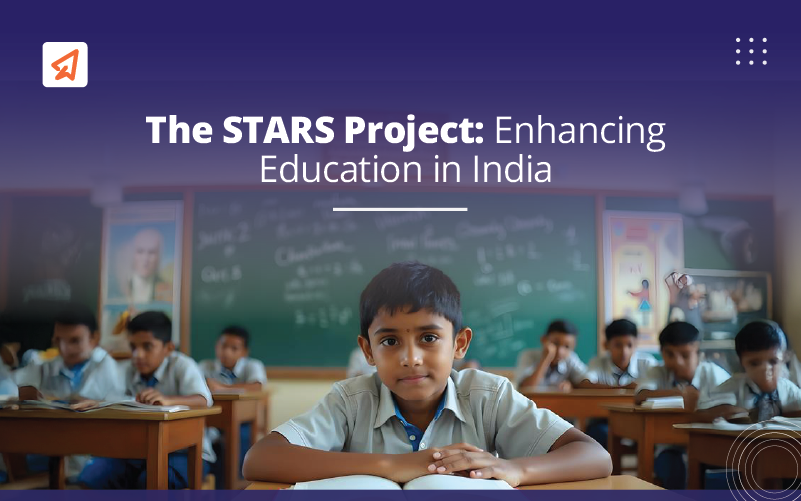
What is the STARS Project?
2 Major Elements of the STARS Project
This project consists of a national component and state components, each tailored to address specific educational challenges.
-
National Component
The national component of the STARS project establishes a framework for improving educational practices across the country. It focuses on creating policies, guidelines, and resources that promote quality education. This component emphasises a centralised approach to ensure consistency and support for the states involved.
-
State Component
The state component of the STARS project is multifaceted and addresses various aspects of the education system. The key areas of focus include:
- Strengthening Classroom Instruction and Remediation Through Teacher Development and School Leadership: Investing in teacher training and leadership development to improve educational practices.
- Improving State Learning Assessment Systems: Enhancing methods to evaluate student learning outcomes effectively.
- School-to-Work Transition Strategies: Preparing students for future career opportunities by aligning education with labour market needs.
- Governance and Decentralised Management for Improved Service Delivery: Implementing systems that encourage local governance and accountability.
- Strengthening Early Years Education: Establishing a solid foundation for children through school readiness initiatives.
How STARS Supports Indian Education
The STARS offers effective methodologies designed to enhance the educational framework in India. Here’s how it addresses specific needs:
- Cultivation of a Skilled Workforce in India: By strengthening education, the STARS project aims to invest in the future of India, ensuring a more skilled and knowledgeable workforce.
- Fulfilment of Specific Demands: The program considers the varying demands of students, teachers, and communities, enabling targeted support.
- Transformation of Jobs: By incorporating skill development into the curriculum, the project prepares students for the evolving job market.
- Customisation of Local-Level Solutions: Each state receives tailored strategies to meet its unique educational challenges, ensuring that interventions are relevant and effective.
- Prioritisation of the Needs of Marginalised Groups: The STARS provides special attention to vulnerable sections, ensuring equitable access to quality education.
- Development of Teachers: Equipping teachers with constant professional development is essential for enhancing classroom instruction.
All of these reflect NEP 2020’s priorities for equitable, high-quality education and improved learning outcomes.
Which Indian States are Included Under the STARS Project?
The STARS project currently covers six states in India, each chosen for its specific educational challenges and potential for improvement:
- Madhya Pradesh
- Odisha
- Kerala
- Rajasthan
- Himachal Pradesh
- Maharashtra
These states are pivotal in implementing the STARS. Their experiences can provide valuable insights into the project’s overall impact.
What are the Major Challenges Faced By the STARS Project?
The STARS project holds great promise for improving educational outcomes; however, it encounters several significant challenges that could hinder its success. These include:
- Resource Limitations: Implementing changes often requires financial resources and infrastructure that may be lacking in some regions.
- Resistance to Change: Traditional mindsets and resistance from educators and administrative bodies can impede progress.
- Evaluation of Impact: Measuring the effectiveness of interventions can be complex, as educational outcomes often take time to manifest.
- Maintenance of Consistency: Ensuring uniform implementation across various states, each with unique contexts, presents significant difficulties.
- Technological Advancements: As a teacher, it’s vital to remain updated on the latest tools, yet excessive reliance on technology can disrupt learning unless supported by a solid plan.
- Allocation of Funds: The World Bank’s tendency to centralise decision-making can lead to inefficient distribution of resources at the local level. Consequently, without a strategic funding approach, the STARS project may struggle to achieve its goals effectively.
- Logistical Complexities: Each state has its unique requirements, making it challenging to maintain the necessary adaptability and flexibility.
Case Studies on the STARS Project
-
Pahile Paule: Strengthening Early Years Education in Maharashtra
Launched in 2022 under the STARS, the Pahile Paule program in Maharashtra aims to prepare children for Grade 1. This initiative emphasises parental engagement, particularly among mothers, to support children’s transition into formal education.
Key Features:
- Parental Involvement: Formation of 2.5 lakh groups of mothers to promote early learning practices.
- Teacher Training: Educators receive training at district, block, and cluster levels to implement readiness activities effectively.
- Learning Materials: Distribution of QR-coded activity books linked to the DIKSHA app enhances home-based learning.
- School Readiness Melas: These events are conducted across 70,000 government primary schools. They include assessing children’s readiness and providing report cards.
Impact:
The Pahile Paule program has reached over 14 lakh children, significantly improving their readiness for formal education. Evaluations by the Pratham Education Foundation have illustrated the critical role of community engagement, particularly the proactive involvement of mothers, in enhancing children’s preparedness for school.
-
Vidhya Samiksha Kendra: Governance and Decentralised Management in Madhya Pradesh
In Madhya Pradesh, the Vidhya Samiksha Kendra (VSK) was established to improve governance and student learning outcomes through technology-driven systems.
Key Features:
- Technological Innovations: Implementation of NDEAR-compliant tools for scalable, evidence-based policymaking.
- Data-driven Governance: Utilisation of academic and non-academic data to guide targeted interventions.
- Real-time Monitoring: Oversight of field-level implementation to improve service delivery.
- Chatbots for Learning: Facilitate assessments and interactive learning modules.
Impact:
The VSK has reached 31.23 lakh students across 98,272 schools, with thousands of math questions practised and numerous weekly assessments conducted. This initiative has expanded its reach through professional development for teachers and holistic report cards for the upcoming academic year.
How Could Extramarks Assist With the Effective Execution of the STARS Project?
Extramarks can significantly enhance the execution of the STARS project through its advanced ed-tech solutions. By focusing on key objectives such as improving early-year education, teacher performance, and classroom practices, Extramarks can facilitate a transformative educational experience.
Its interactive learning tools and personalised modules enhance foundational learning and engage students effectively. Moreover, Extramarks’ comprehensive assessment systems provide real-time analytics and actionable insights. It allows educators to monitor progress and address learning gaps efficiently.
Additionally, the digital resources provided by Extramarks support teacher training, fostering skill development and innovative teaching methods. By integrating technology within education, Extramarks aligns seamlessly with the STARS project’s mission to improve educational outcomes.
By integrating technology in classrooms and supporting teachers, Extramarks helps STARS meet its objectives and complements the vision of NEP 2020.
Conclusion
The STARS project is a major step toward improving education quality, equity, and outcomes in India. By addressing early education, teacher development, governance, and localised solutions, it supports the NEP 2020 vision for a modern, inclusive, and future-ready education system.
For educators, school leaders, and policymakers, understanding and engaging with STARS can help ensure every child receives the education they deserve.
Reviewed by

Priya Kapoor | VP - Academics
Priya Kapoor is an accomplished education professional with over 18 years of experience across diverse fields, including eLearning, digital and print publishing, instructional design, and content strategy. As the VP – Academics at Extramarks, she leads academic teams in creating tailored educational solutions, ensuring alignment with varied curricula across national and international platforms...read more.

Last Updated on February 18, 2026