
What is Teacher Retention and How to Retain Your Best Teachers?

Educational institutions invest in good hiring strategies to attract the top pedagogical talent. However, the best institutions also work hard to retain their recruited talent. Talented teachers create a pleasant and memorable learning experience for students, thus improving the standard of education offered in the school and helping their institution build a desirable reputation.
This article will discuss the details of teacher retention, the significance of teacher retention in modern education, the effects of high teacher turnover, and some teacher retention strategies that new-age schools can implement to hold on to talented teachers in their institution.
What is Teacher Retention?
Teacher retention is the same as employee retention in any other industry. An employee may decide to continue working with their organisation, or they may choose to seek new job opportunities. Employers must also make efforts to retain their employees.

Similarly, in the education industry, teachers may choose to stay in the institution they are working with or seek new opportunities. It is up to the schools to make sure they don’t leave. According to a recent study, teachers are most likely to exit their jobs within the first two years.
One in five new teachers leave their profession after the first two years, while four in ten leave after the first five years. {SOURCE} Preventing teacher turnover and ensuring that good teachers choose to work with your school is called teacher retention.
Why Teacher Retention Is Important
Teacher retention is a key factor in creating a stable and effective learning environment. When schools are able to keep experienced teachers, it strengthens classroom consistency, supports student progress, and builds a positive school culture. Below are the main reasons why teacher retention is essential for schools.
1. Ensures Continuity and Strong Teacher–Student Relationships
When teachers stay longer, students benefit from consistent routines, expectations, and teaching styles. They don’t have to adjust to new teachers every year, which helps them learn more smoothly. Long-term teachers also build deeper relationships with students, allowing them to understand their needs, strengths, and challenges better. This leads to more personalised and effective teaching.
2. Improves Teaching Quality and Preserves Institutional Knowledge
Experienced teachers refine their instruction, classroom management, and understanding of the school’s curriculum over time. Retaining them helps maintain high-quality teaching. When teachers leave frequently, schools lose valuable knowledge about what works in the classroom, what supports students best, and how to handle unique situations. This “institutional memory” is hard to replace.

3. Builds a Stable School Culture and Strong Collaboration
Teacher retention creates a steady, supportive school environment. When educators work together over several years, they can share best practices, mentor new teachers, and collaborate more effectively. A stable staff also means fewer disruptions and fewer cycles of re-training, which helps school-wide programs, policies, and improvements run smoothly.
4. Leads to Better Student Outcomes
Schools with higher teacher retention often see better academic performance and improved student well-being. Consistent teaching is especially important in schools that serve high-needs or disadvantaged communities. On the other hand, frequent turnover can harm learning—even for students whose own teacher hasn’t changed—because instability affects the entire school climate.
5. Reduces Costs and Saves School Resources
Hiring and training new teachers takes significant time and money. When schools retain their teachers, they save these resources and can invest them in other important areas such as learning materials, technology, or student support programs. Lower turnover also allows school leaders to focus on improving instruction instead of constantly managing staffing gaps.
Why do Teachers Leave?
Teachers are the backbone of any school, but many leave the profession each year, creating challenges for student learning and school stability. Understanding why teachers leave is essential for school leaders to create supportive environments, reduce burnout, and retain experienced staff.
1. High Stress Levels
Teachers face constant pressure to manage classrooms, meet academic standards, and address individual student needs. Schools need to recognize that high stress is not just personal but systemic. Providing support through mentoring programs, wellness initiatives, and realistic expectations can help teachers cope better.
2. Overwhelming Workload
Excessive responsibilities—from lesson planning and grading to administrative duties and extracurricular supervision—can quickly lead to burnout. Schools should regularly assess teacher workloads, streamline administrative tasks, and consider additional support staff to prevent overload.
3. Insufficient Administrative Support
Teachers often leave when they feel unsupported by school leadership. Administrators must actively engage with staff, provide guidance, and respond promptly to concerns, ensuring teachers feel valued and heard.
4. Low Pay and Compensation Issues
When compensation does not reflect the effort, skill, and responsibilities of teaching, retention suffers. Schools and districts should advocate for fair salaries, offer incentives, and explore benefits that improve teacher satisfaction.
5. Limited Career Growth
Teachers need opportunities to advance professionally. Schools should provide clear pathways for promotion, professional development programs, leadership roles, and recognition systems to encourage long-term commitment.
6. Limited Autonomy
Strict curricula, testing mandates, and rigid teaching policies can stifle creativity. Schools should give teachers flexibility in instructional methods and encourage innovation, fostering a sense of ownership and professional pride.
7. Unrealistic Expectations
Expectations that are impossible to meet—whether from administration, parents, or policymakers—can demoralize teachers. Schools must set realistic goals, involve teachers in decision-making, and balance demands with achievable outcomes.
8. Poor Communication
Ineffective communication creates confusion and frustration. Transparent, regular, and two-way communication between administrators, teachers, and parents helps maintain trust and clarity, reducing dissatisfaction.
9. Personal Reasons
Even with the best conditions, personal circumstances may cause teachers to leave. Schools can maintain positive relationships with departing staff, offer flexible policies where possible, and provide support during transitions to help retain a strong teacher network.
How Does Teacher Turnover Affect Student Achievement?
Young students often develop strong bonds with their teachers, which can influence their motivation and engagement in learning. Frequent teacher turnover can disrupt these relationships, leading to decreased participation, lower engagement, and potentially reduced academic performance.
Additionally, substitute teachers, who may be less familiar with students’ individual needs or classroom routines, can struggle to provide the same level of continuity and support. For students from disadvantaged backgrounds, these disruptions can be particularly detrimental, increasing the risk of absenteeism and, in extreme cases, school dropout.
11 Effective Teacher Retention Strategies to Retain Your Best Teachers
Here is a look at some of the best practices for teacher retention –
1. Eliminate Toxic Culture
School leaders should be sensitive to the culture and mood of their workforce. If negativity is allowed to build, it can influence the work culture of your institution. Teachers who find their workplace toxic will likely switch jobs or choose different careers.
Keep a check on the administrative responsibilities given to teachers to ensure they don’t feel overwhelmed. Practice sharing positive affirmations, appreciation for efforts, and maintaining a supportive attitude to foster a positive culture in your school.
2. Build Personal Connections
Staff members appreciate honest and transparent relationships with their management. As a school leader, strive to build personal relationships with all your teachers. A lack of personal connection can deprive you of knowing what teachers think or how they feel about working with your school.
On the other hand, a solid relationship will enable your staff to approach you with their problems and motivate them to work with your school for the long term.
Getting involved in your school’s day-to-day activities, initiating conversations with all levels of staff members, and creating opportunities for effortless connections can help you make long-lasting relationships with teachers in your school.
3. Give Teachers a Voice
Everyone appreciates an opportunity to voice their concerns, and schools can benefit from allowing teachers to share opinions and raise concerns regularly. Employees who feel heard and valued in their workplaces’ important decisions tend to be more productive and attentive to their responsibilities.
Encourage teachers to discuss their concerns and elect representatives to raise them to the management. These representatives can also sit at the table when critical management decisions of the school are debated. It will help involve teachers in management and create better transparency in the school hierarchy.
4. Administrative Support
Administrative duties like planning lessons, grading tests, photocopying, and writing reports are an indispensable part of a teacher’s role. As the management, you must ensure that teachers are never overburdened by their administrative tasks. Excessive administrative responsibilities may cause teachers to get distracted from teaching responsibilities. Support from school leadership in the form of resources, assistance, and transparent managerial procedures can help teachers fulfil their administrative and pedagogical duties efficiently. Allowing teachers to voice their opinions to the management is also helpful in this scenario.
5. Opportunities for Collaboration
Working together can help teachers find new ideas, build better peer relationships, and get unbiased feedback on their methods. Schools should offer teachers opportunities to collaborate several times in the academic year. It will build trust and goodwill among teachers and create organic professional development opportunities for them.
School leadership should plan for collaborative pedagogical research projects, problem-solving committees, and collaborative lesson-planning activities for teachers from the beginning of the school year. Teachers should also be encouraged to find collaborative opportunities on their own.
6. Learn to Appreciate the Efforts of Others
Management should strive to see the school and administrative decisions from the teachers’ perspective. Teaching and classroom management can be challenging, and teachers deserve support from parents, administrators, and school leaders at every step. School leadership should be mindful to show appreciation for the efforts of teachers and other staff members wherever appropriate.
If someone has taken the initiative to change or improve the school system, their efforts should be spotlighted and applauded. It will set teachers up for success and encourage many others to take initiative in the school.
7. Improve Teacher Autonomy
Giving teachers a greater influence over how they do their jobs can drastically improve teachers’ job satisfaction and retention. Excessive scrutiny of lessons and teaching styles can be considered intrusive and mistrusting by teachers. Improving teacher autonomy by allowing them to decide their strategy for classroom management and planning their lessons – can create a culture of trust and support in the school.
Management should support and work with teachers to solve classroom issues whenever needed. But the relationship should be based on mutual respect and collaboration, not accountability and fear. Better autonomy will help teachers feel respected and valued as professionals.
8. Flexibility
Work-life balance for teachers is as important as for other professionals. Often, teachers leave their school or profession as they don’t find the necessary flexibility. In schools where flexible working models are allowed, teacher retention is higher, staff morale and wellbeing are improved, and educators are enthusiastic about capacity and skills development. Flexibility in the work schedule helps teachers reduce stress and improve their lifestyle. School leadership must address the diverse needs of their teachers and offer the flexibility to mould their schedules to suit their needs.
9. Reduced Workload
A teacher’s primary responsibility is to teach well and enhance their students’ learning journey. But schools often expect them to contribute more than that. They shoulder administrative responsibilities, discipline protocols, and solve classroom management issues. Although, as an employee of the school, teachers willingly take on several of these tasks, school leadership should be mindful of their workload.
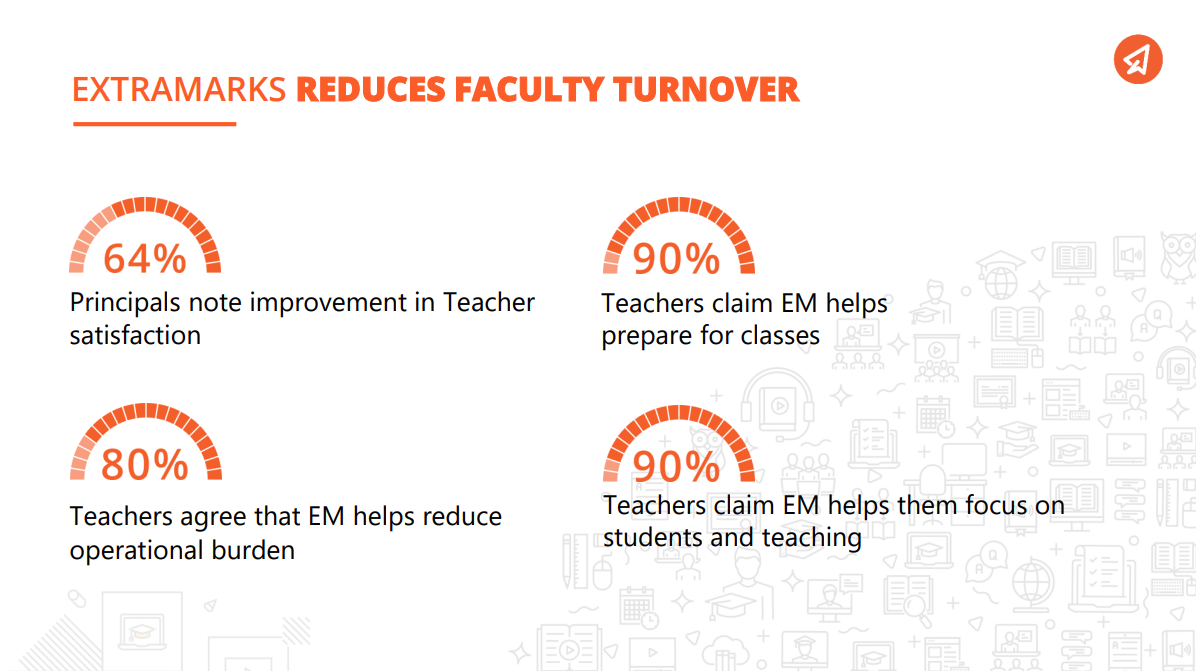
Analysing the distribution of school workload and leveraging classroom technology to make administrative work easier are effective strategies to reduce teachers’ workload in schools.
Teaching Made Easy with Extramarks
Extramarks partners with schools to offer customised technological solutions for administrative tasks, classroom management, and exam evaluation. Teachers find their workload significantly relieved when they use the Extramarks Teaching App and Assessment Centre to automate many tasks related to grading tests, compiling attendance records, making reports, and planning lessons. All Extramarks solutions are designed to suit educators and students in K-12 education to create a supportive teaching and learning environment.
End-to-end teaching solutions to help teachers conduct classes effectively.
10. Respect
Creating a culture of respect and value for teachers can drastically improve retention among teachers. Considering the challenges of the teaching job, teachers are likely to work for a school where they feel valued and respected, unlike an institution with an atmosphere of distrust. Parents, school administrators, and students should strive to create a culture of respect for teachers within the walls of the school building and in society.
11. Purposeful Professional Development for Teachers
Access to high-quality training and professional development resources can empower teachers to excel and enhance their students’ education experiences. Schools should invest in organising professional development programs for their teachers at least once a year. Schools with lower budgets can opt for organic professional development through peer collaboration, mentorship, and peer-to-peer feedback.
12. Offer Fair Compensation
Competitive and fair salaries are one of the most effective ways to retain quality teachers. When teachers feel their skills and dedication are appropriately valued, they are more motivated to stay and contribute long-term. Beyond base pay, schools can also consider performance-based incentives, bonuses for additional responsibilities, and benefits such as healthcare, retirement plans, and professional development allowances. Ensuring compensation reflects experience, expertise, and the cost of living not only reduces turnover but also fosters a sense of professional respect and loyalty among staff.
Conclusion
When schools actively try to improve teacher retention, the results speak for themselves. Students thrive with better stability and consistency in their education, while happy teachers work harder to offer a better learning experience. Schools can improve teacher retention just by creating a positive and respectful school culture where teachers feel valued and trusted. Those who can afford to make systemic changes or invest in teacher retention can opt for strategies like better compensation and benefits, organising professional development programs, and giving teachers higher autonomy and flexibility.
Reviewed by

Priya Kapoor | VP - Academics
Priya Kapoor is an accomplished education professional with over 18 years of experience across diverse fields, including eLearning, digital and print publishing, instructional design, and content strategy. As the VP – Academics at Extramarks, she leads academic teams in creating tailored educational solutions, ensuring alignment with varied curricula across national and international platforms...read more.


Last Updated on December 9, 2025