How NEP 2020 Accelerates the Adoption of LMS in Indian Schools
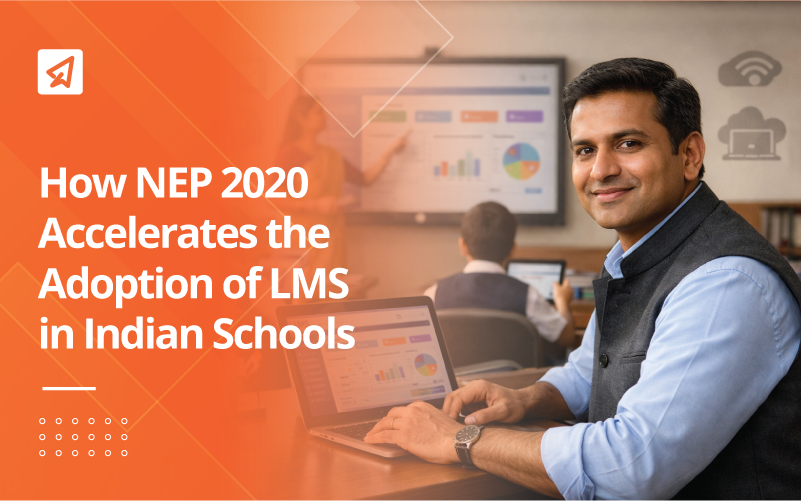
If you’re working in a school today, you’ve probably heard a lot about digital learning and online platforms. But it’s not just about going paperless or using apps. With the National Education Policy (NEP) 2020, the push for smarter, tech-driven classrooms is becoming a national priority. One of the biggest shifts is how schools are starting to use Learning Management Systems (LMS) to manage lessons, assessments, student progress, and even communication. NEP 2020 creates a clear framework for why and how digital tools like LMS should be part of everyday learning. In this article, we’ll look at how NEP 2020 is speeding up LMS adoption across India and what that means for your classroom.
Why LMS is No Longer Optional Under NEP 2020
The National Education Policy (NEP) 2020 calls for deep structural changes in how teaching and learning work in schools and colleges. It talks a lot about flexibility, inclusivity, and personalisation. To make any of that happen across hundreds or thousands of students, you need a system in place that can track progress, deliver learning, and collect data without manual overload. That’s where a Learning Management System (LMS) comes in.
Let’s look at why NEP actually makes LMS essential.
-
Moving from Rote to Competency-Based Learning
NEP shifts the focus away from memorisation. It encourages schools to help students build real-world skills, master concepts at their own pace, and even choose their learning paths. But all this flexibility creates complexity. You need to track where each student is, what they’ve mastered, and what still needs work. An LMS helps you do that.
With an LMS, you can:
- Assign content based on each learner’s pace or level
- Use rubrics instead of marks to assess skills
- Run adaptive assessments
- Maintain digital records of competencies over years
This kind of tracking and delivery just isn’t practical without a digital system behind it.
-
Making Learning Inclusive for All
NEP strongly pushes for inclusive education. That means reaching learners from all economic, geographic, and language backgrounds, as well as those with different abilities.
An LMS makes this possible by:
- Supporting multilingual content
- Including accessibility features for screen readers, captions, and alternate formats
- Helping remote learners keep up through blended or online-only options
Students who can’t always be in a physical classroom still deserve a smooth learning experience. LMS platforms help ensure they don’t get left behind.
-
Technology is Not Just Support, It’s Strategy
NEP doesn’t treat digital learning as an optional add-on. It sets up entire structures to support it:
- NETF to guide tech decisions in education
- NDEAR as the digital framework for all institutions
- DIKSHA as a national platform for textbooks and teacher tools
- SWAYAM to support university-level online learning
But to make these tools useful in daily teaching, you need an LMS to:
- Assign DIKSHA content to the right learners
- Collect data on how students interact with these materials
- Sync SWAYAM courses with internal assessments, credits, and schedules
An LMS ties national platforms to your local classroom or college.
-
New Structure, New Needs
The 5+3+3+4 structure introduced by NEP breaks education into four stages, each with a different focus. From play-based learning in early years to deep, multidisciplinary subjects in senior secondary, the approach is different at each level.
An LMS helps schools:
- Align learning material and assessments with each developmental phase
- Keep long-term learner records even as students move through different stages
- Deliver age-appropriate digital learning, assessments, and progress reports
This kind of coordination becomes much easier when everything is connected through a central system.
-
Continuous and Formative Assessments
NEP discourages one-shot, high-stakes exams. It calls for regular assessment through quizzes, activities, reflections, peer reviews, and projects. Some are informal, some are structured, but all need to be tracked.
Here’s where LMS tools really help:
- Automate quiz scheduling and grading
- Collect peer and self-assessment data
- Generate reports that combine academic, emotional, and social growth
- Store all this data for audit or parent feedback
Without a digital system, it’s hard to manage this level of continuous tracking.
-
Supporting Blended and Flipped Classrooms
NEP encourages blended learning. This means giving students access to digital materials before class so that class time can be used for discussions, group tasks, and doubt clearing.
An LMS becomes the base platform to:
- Share videos, slides, and notes in advance
- Host online quizzes and reflections after class
- Track who watched or read what
- Log participation in both in-person and virtual settings
It helps make learning more interactive and better aligned with modern pedagogical goals.
Why LMS Is the Policy-Aligned Enabler
Here’s why LMS is the policy aligned enabler:
-
Personalized Learning Paths
An LMS helps you support each student at their own level. You can assign lessons based on individual needs, track their pace, and offer different types of activities for different kinds of learners. This makes it easier to support slow movers without holding back faster ones. With personal dashboards, students know what’s next, and you know where to intervene.
This approach fits right into the NEP goal of tailoring education to every learner’s pace, style, and interest. Whether you teach in a high-tech school or a rural setup, the LMS gives you structure and flexibility at the same time.
-
Competency or Outcome-Based Assessment and Analytics
With an LMS, assessments aren’t just about marks. You can tag every quiz, test, or activity to specific learning outcomes or competencies. This means you can track what students are learning, how well, and where the gaps are.
Over time, this builds a clear picture of how your students are progressing, not just in academics, but also in skills like critical thinking or collaboration. The LMS gives you charts and reports that help you adjust your teaching and make classroom decisions that are backed by data. This kind of targeted assessment is exactly what modern policies want schools to implement.
-
Blended and Multimodal Learning (Mobile and Offline-First)
Today’s classrooms aren’t always in the same place or format. An LMS lets you support both face-to-face and online learning with one system. Whether students are using a phone, a tablet, or a school computer, they can access the same lessons, videos, quizzes, and materials. If internet access is an issue, offline features can keep them learning without disruption. This flexibility is helpful when students are absent, during holidays, or in areas with limited connectivity.
-
Teacher CPD and Digital Pedagogy at Scale
The LMS is not just for students. It also helps teachers grow. Through built-in courses, resource libraries, discussion forums, and recorded webinars, teachers can upskill on the go. You can complete CPD (Continuous Professional Development) modules without leaving your school.
It also helps you practice digital pedagogy. From creating your own online lessons to using multimedia in class you can do everything. As a result, your confidence with technology grows. This kind of scale in teacher training is hard to achieve without a good LMS in place.
What data shows NEP 2020 is accelerating LMS and e-learning in India?
Here’s the data which shows how NEP 2020 is accelerating LMS and e-learning in India:
| Metric | Value/Projection | Period | Source |
|---|---|---|---|
| India LMS Market Size | $751.8M → $3,018.06M | 2024 → 2033 | IMARC |
| LMS Delivery CAGR | 20.57% | 2023–2029 | Business Wire/R&M |
| India E-learning Market | $10.24B → $28.46B | 2023 → 2029 | Business Wire/R&M |
| EdTech Market Size | $7.5B → $29B | 2024 → 2030 | IAMAI via iDream |
| Online Education Growth | +$8.53B; 29% CAGR | 2024–2029 | Technavio |
| K-12 Scale (Students/Schools) | 235M / 1.47M | 2023–24 | Education For All in India |
How Extramarks Supports NEP-Aligned LMS Adoption
If you’re looking for a platform that helps bring NEP 2020 into everyday classroom practice, Extramarks is designed for that exact purpose. Here’s how it supports schools and teachers like you in making policy goals part of your daily workflow.
-
Turns Policy into Practice
Extramarks maps NEP competencies directly into student learning paths. Every quiz, lesson, and activity is tied to measurable outcomes. You get analytics that show how students are progressing across specific skills and goals. This helps teachers make focused decisions based on actual learning data.
-
Supports Continuous Teacher Upskilling
Extramarks places teacher development at the centre of its LMS. Through Extramarks Academy, teachers in Extramarks-powered schools can enrol in a self-paced digital teaching certification that focuses on using digital classroom tools, building interactive lesson plans, and aligning teaching practices with NEP goals.
Alongside this, Extramarks offers hands-on workshops and structured training to help teachers use the LMS confidently in real classrooms. The platform also supports schools in meeting formal CPD requirements, including CBSE-mandated annual training hours, making professional growth organised, accessible, and policy-aligned.
-
Designed for Equity
Extramarks is built with inclusivity in mind. It supports multilingual content, mobile-first access, and offline learning options. Whether your students are in urban classrooms or rural schools, they can still access the same quality of lessons and assessments.
This helps schools meet NEP’s call for equitable access to learning without needing extra infrastructure.
Book a Demo
Closing Thoughts
NEP 2020 has made it clear that digital systems are no longer optional in Indian classrooms. As schools move towards competency-based learning, continuous assessment, and inclusive education, an LMS becomes the backbone that holds everything together. With a platform like Extramarks in place, schools can turn policy goals into everyday classroom practice and support both teachers and students in a more organised, meaningful way.
Reviewed by

Prachi Singh | VP - Academics
Prachi Singh is a highly accomplished educationist with over 16 years of experience in the EdTech industry. Currently, she plays a pivotal role at Extramarks, leading content strategy and curriculum development initiatives that shape the future of education...read more.

Published on January 23, 2026