
What is Education Technology (EdTech) – Types, Advantages and Uses
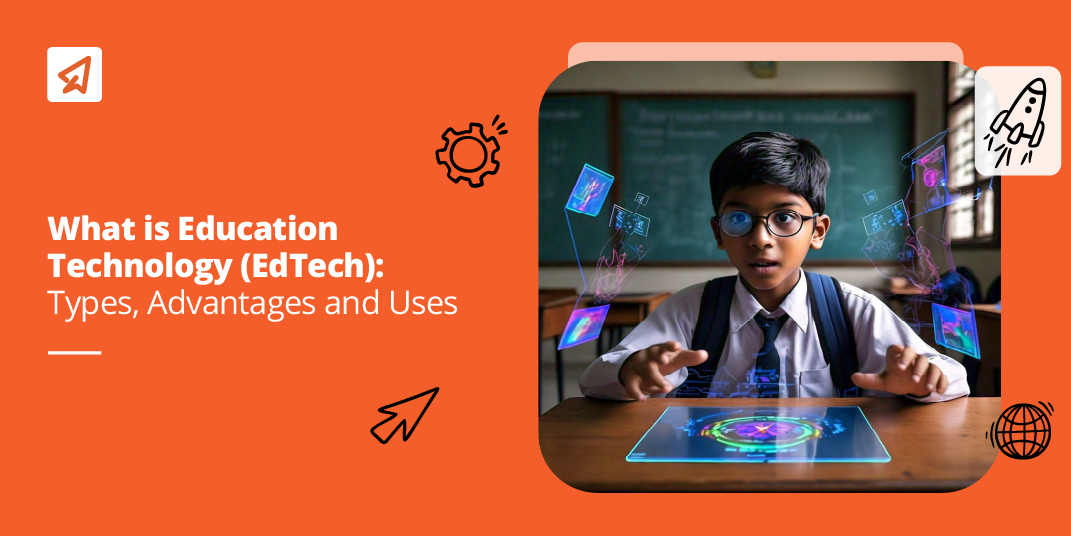
Education Technology (EdTech) has evolved from a classroom luxury into the backbone of modern learning. By blending digital innovation with instructional design, EdTech moves beyond “screens in classrooms” to create a data-driven ecosystem. This shift empowers teachers, engages students, and provides parents with real-time insights, ensuring education is more inclusive and future-ready for everyone.
Key Takeaways:
- Educational technology covers a wide range of tools like smart classrooms, AI, adaptive learning platforms, and digital content that support teaching and learning in schools.
- EdTech is growing rapidly across the world and in India, with schools increasingly adopting digital tools to improve engagement and learning outcomes.
- Technology helps address different learning needs by personalising lessons, improving understanding through visuals, and reducing manual work for teachers.
- Real examples from Indian schools show how tools like VR labs, AI learning programs, and coding initiatives are changing how students learn in classrooms.
- Successful use of EdTech depends on clear goals, proper planning, teacher training, and choosing platforms that support both classroom and home learning.
What is Educational Technology (EdTech)?
Education Technology (EdTech) is the strategic integration of digital tools, software, and hardware into the learning environment to enhance pedagogical outcomes. It encompasses everything from Learning Management Systems (LMS) and AI-driven adaptive learning platforms to interactive hardware like smartboards, all designed to personalise the student experience and streamline educator workflows.

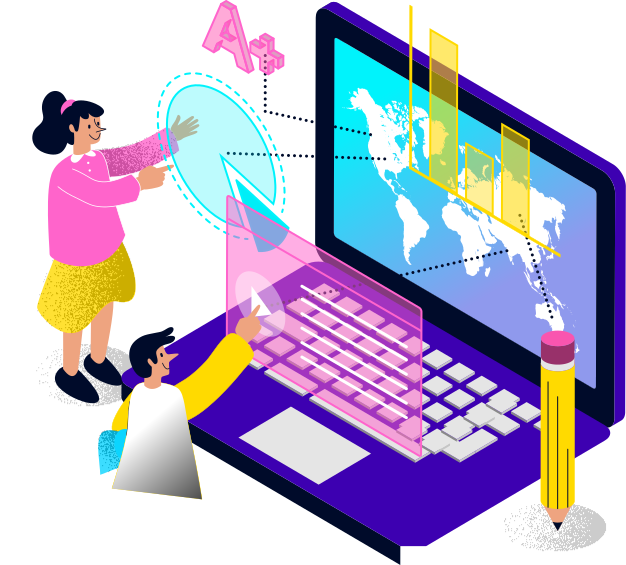

The objective of educational technology is to use ICT (Information & Communication Technology) tools as enablers for better teaching and learning outcomes in any kind of classroom – in-person, smart classroom, hybrid or remote classroom.
The evolution of EdTech has been remarkable, moving from traditional teaching tools like chalkboards to cutting-edge technologies. Today, virtual reality can transport students on immersive field trips to ancient civilisations, and AI-driven platforms can tailor learning experiences to each student’s unique strengths and weaknesses. In fact, for stakeholders like school owners, principals, teachers, administrators, and consultants, understanding what educational technology is and diving deep into it is no longer optional—it’s imperative. It represents a shared commitment to making education more accessible, engaging, and effective for everyone. The importance of education technology cannot be overstated, as it plays a crucial role in modernizing and enhancing the educational experience, ensuring that learners are equipped with the skills and knowledge necessary to thrive in an increasingly digital world.
Top EdTech Insights for K-12 Education: Global and Indian Trends
If you’re looking to understand how EdTech is shaping the future of K-12 education, both globally and in India, here’s a quick walkthrough of the most important developments you should know about.
Global Trends:

- According to Exploding Topics, the EdTech market is valued at $340 billion, and is projected to reach a staggering $605 billion by 2027.
- The global EdTech and smart classrooms market grew from $140.24 billion in 2022 to $162.89 billion in 2023, showcasing the rapid adoption of digital tools in education, as per Global Newswire.
- EdTech usage among K-12 schools has increased by 99% since the year 2020, according to Exploding Topics.
- The global K-12 online education market was valued at $171.5 billion in 2024. It’s projected to grow to a massive $2,248.36 billion by 2033, highlighting the long-term shift to digital learning.
- The global education technology market is expected to hit $205,481.95 million in 2025 and rise to $750,239.18 million by 2034. That’s a compound annual growth rate (CAGR) of 17.57 percent, indicating a healthy pace of expansion.
India Specific Trends:
- According to CNBC TV18, India ranks just behind the US in the e-learning market, boasting a value of $6 billion, with projections indicating a rise to $10 billion by 2025.
- The smart classroom sector in India is anticipated to experience a 5.8% CAGR from 2023 to 2029, as per Blueweave Consulting.
- As per Mint, over 4,450 EdTech startups originating from India are aiding more than 300 million students worldwide.
- The current market value stands at ₹64,875 crore (around $7.5 billion). According to a report by the Internet and Mobile Association of India (IAMAI) and Grant Thornton Bharat, it is expected to reach ₹2,50,850 crore (about $29 billion) by 2030.
Types of Educational Technology Based on Learning
Now that we have looked at the trends around this vast and dynamic field let’s delve into the types of educational technology, as it can be quite overwhelming to understand when to implement what.
Whether you’re a teacher planning lessons, a school administrator aiding in shaping curriculum, a consultant advising educational institutions, a principal overseeing academic progress, or a school owner investing in the future of education, understanding the role of technology in education and the various types of learning technologies is key.
Each method – be it Synchronous, Asynchronous, Collaborative, or Linear Computer-Based Learning, serves unique learning objectives and environments to enhance educational experiences and requires different types of educational technology:

Synchronous Learning:
Synchronous learning refers to educational activities that happen in real-time, where teachers and students interact simultaneously. Technologies like live video conferencing tools, real-time chat platforms, and interactive webinars are central to this approach. The benefit of synchronous learning is the immediate feedback and interaction it offers, closely mimicking traditional classroom dynamics. However, it requires participants to be available at the same time, which can be challenging across different time zones or schedules.

Asynchronous Learnings:
Asynchronous learning, in contrast, allows learners to access and engage with course materials on their own schedule. This method often utilises pre-recorded video lectures, digital assignments, and online discussion forums. It offers flexibility, enabling learners to study at their own pace and revisit materials as needed. The challenge here lies in maintaining motivation and engagement without the real-time interaction of a traditional classroom.

Collaborative Learning:
Collaborative learning emphasises the power of learning with others. It leverages technology like shared digital workspaces, social media platforms, and collaborative software tools to enable group projects and peer-to-peer interactions. This approach fosters teamwork and communication skills, offering a more dynamic and interactive learning experience. The key challenge is ensuring effective collaboration and communication among all participants.

Linear Learning – Computer-Based Learning:
Linear learning, especially in the form of computer-based learning, involves a structured, step-by-step instructional approach. Educational software and interactive modules guide learners through a predetermined sequence of topics or skills. This method is particularly effective for foundational subjects and skill-based training, providing a clear and focused learning path. However, it may lack the flexibility and adaptability of other forms of learning.
Ready to Leverage Technology to Redefine Teaching and Learning Outcomes in Your Institution?
1. Extramarks Smart Class Plus Interactive modules for an engaging learning experience.
2. Extramarks Assessment Centre Personalized assessments for tailored learning paths.
3. Extramarks School Learning App 24×7 access to educational resources anytime, anywhere.

What are the Benefits of Technology in Education?
Technology stands as a bridge within the educational ecosystem – connecting ideas, people, and possibilities. For those at the forefront – school owners, principals, teachers, administrators, and consultants- understanding the nuances and the impact of technology in education is a journey into the heart of transformation. Let’s explore the game-changing benefits of education technology and see how they resonate across all roles in the educational ecosystem.
Here’s a closer look at the benefits technology brings to the education sector:
-
Expanded Global Reach:
Digital platforms and online resources have shattered the barriers of geography. Institutions can now draw students from diverse corners of the world, fostering a globalised learning environment. This broader reach not only boosts revenue potential but also stimulates cross-cultural exchanges, leading to a more diverse student body and an elevated global reputation. The wealth of international talent accessible through digital channels enhances the educational experience, creating a more inclusive and interconnected learning community.
-
Increased Competitiveness:
Incorporating technology into education empowers institutions to maintain a competitive edge. By offering innovative digital learning solutions, institutions attract a wider, more varied student body. This increased competitiveness translates into increased enrollments and strengthens the institution’s image as a forward-thinking, tech-savvy educational hub. Moreover, it positions the institution as a frontrunner in delivering top-quality education, effectively preparing students for the demands of the digital age.
-
Enhanced Educational Resource Access:
Digital platforms and online libraries grant students and faculty access to an unparalleled wealth of educational resources. From e-books and research databases to interactive multimedia content, these resources enhance the learning experience and provide valuable support for academic research and innovation. This access empowers institutions to stay at the forefront of educational materials and curricular developments, ensuring students receive a competitive and up-to-date education.
-
Reduced Paperwork:
Digital systems and document management solutions revolutionise administrative processes by decreasing the burden of manual record-keeping and paperwork. This streamlined approach not only saves time and resources but also eliminates the risk of errors. Consequently, institutions can allocate their efforts and resources more efficiently toward educational objectives. Additionally, this shift aligns with sustainability initiatives by reducing the environmental impact associated with excessive paper usage.
Benefits of Education Technology for Teachers:
-
Classroom Management Tools:
Classroom management tools, encompassing software and scheduling systems, are revolutionising how teachers organise their day. These tools streamline tasks like tracking attendance, monitoring grades, and observing student progress. The result? Teachers spend less time buried in paperwork and more time doing what they love – teaching and engaging with students.
-
Teacher Professional Development:
In the fast-evolving educational landscape, technology catalyses teacher growth. Online platforms and digital resources provide teachers with continuous access to the latest teaching methodologies and subject-specific information. This approach to professional development keeps teachers at the cutting edge of educational practices, surpassing the limitations of traditional textbooks.
-
Data-Driven Decisions:
Technology equips teachers with a wealth of data, offering deep insights into student performance. This data-driven approach enables teachers to identify areas needing more focus and refine their teaching strategies accordingly. It’s not just about individual student progress; this information also guides broader decisions on resource allocation and teacher training programs at the school level.
-
Easy Insights into Student Performance:
Gone are the days of manually compiling student reports. Modern technology simplifies the tracking and analysis of student performance. With automated data collection and analysis, teachers can quickly identify areas where students excel or need more support, allowing them to dedicate more time to personalised student guidance and less to administrative tasks.

Flexible Learning and Teaching:
Technology introduces unprecedented flexibility in the learning and teaching process. Teachers can now offer recorded lessons, allowing students to learn at their own pace and revisit complex topics as needed. This flexibility benefits all students, catering to diverse learning styles and schedules, and creates a more inclusive and adaptable classroom environment.
Advantages of Educational Technology for Students:
-
Immersive Learning:
Remember those days of dry textbooks and chalkboard lectures? Well, they’re becoming a thing of the past. Thanks to advancements in technology, learning has gone beyond the traditional walls. With virtual reality (VR) and augmented reality (AR), students now dive into interactive simulations and virtual worlds, making complex subjects easier to grasp. The global education sector is investing billions in AR and VR tech, ensuring students have a more engaging learning experience. It’s not just about textbooks anymore; it’s about exploring, experiencing, and truly understanding.
-
Maximising Collaborations:
Online learning is now a part of everyday school life, and students are more tech-savvy than ever. Online collaboration tools have become the bridge between students and knowledge. Whether it’s group projects or chatting with classmates for quick insights, technology makes learning a team effort. It boosts productivity and keeps students engaged. EdTech doesn’t just connect students within the same classroom; it can bring learners from around the world together. That means cross-cultural exchanges and the chance for kids who can’t go to school to learn remotely with their peers.
-
Encouraging Inclusivity:
The digital revolution in education is bridging the gap between the privileged and the underprivileged. By using online resources, educational institutions are reaching out to communities that previously lacked access. Virtual platforms are breaking the constraints of physical infrastructure, making education more accessible, even in remote areas. It’s not just about academics; it’s also about imparting knowledge on crucial social issues, promoting inclusivity and diversity.
-
Preserving Creativity:
Technology doesn’t suppress creativity; it supercharges it. Educators can now create their own content, share it with students worldwide, and spark the flames of creativity. Lessons become more than just information; they become creative journeys. Students can explore their passions and nurture their talents, fostering confidence to chase their dreams. With endless possibilities, technology becomes a canvas for young minds to paint their future.
-
Incorporating Gamification:
Learning isn’t all about books and lectures; it can also be fun and engaging. The rise of gamification in education is transforming the learning experience. By incorporating game principles, educators are making complex concepts more digestible and enjoyable for students. From young kids to teens and adults, gamification is revolutionising how we approach education, making it more interactive and accessible to learners of all ages.
Benefits of Educational Technology to The Meticulous School Administrator:
-
Easy Access to Information:
In the digital age, administrators can swiftly navigate through a sea of data. From student achievements to staff records, every piece of information is just a click away. This instant access revolutionises how schools manage their data, ensuring a smooth educational journey for every student.
-
Streamlined Administration Tasks:
From scheduling classes to updating student records, edtech tools transform administrative tasks into a seamless process. This not only saves precious time but also allows administrators to focus on strategic planning and student welfare.
-
Improved Communication with Students and Parents:
Digital platforms open up new avenues for communication, bridging the gap between school administrators, teachers, students, and parents. Regular updates, essential notifications, and real-time interactions are now more streamlined than ever, fostering a community where everyone stays connected and informed.
-
Assurance of Data Security:
In an era where data privacy is a sensitive subject, EdTech provides a fortress of security. Protecting sensitive information about students and staff, these tools ensure that privacy and confidentiality are never compromised, giving peace of mind to the entire school community.
-
Generation of Customised Reports:
Tailored reports are just a few clicks away with EdTech tools. These reports provide deep insights into various aspects of school functioning, from academic performance to resource allocation, aiding in informed decision-making and strategic planning.

Eagle Eye View of the School:
EdTech offers a panoramic view of the entire school ecosystem. From the micro-level details of a single classroom to the macro perspective of the whole institution, administrators gain a comprehensive understanding of operations, ensuring effective and efficient management.
Advantages of Education Technology to The Education Advisor/Consultant:
-
Offering Innovative Solutions and Recommendations:
Educational consultants integrate cutting-edge EdTech solutions, enhancing their credibility and adaptability. Their role in bringing innovative strategies to educational institutions marks them as forward-thinking leaders in the educational landscape.
-
Developing Customised Strategies:
Consultants often create tailored strategies using technology, aligning with each institution’s unique educational goals. Their expertise in customising solutions ensures that educational outcomes are optimised, providing a personalised approach to each institution’s needs.
-
Assessing Technological Needs:
Conducting thorough assessments, they identify and address technological gaps in institutions. Their insights into optimising technological infrastructure are crucial for enhancing both teaching and learning experiences.
-
Leveraging AI-Powered Insights:
Consultants use AI for data analysis and predictive insights, aiding in informed decision-making. Their proficiency in using AI tools for anticipatory guidance shapes proactive educational strategies, preparing institutions for future challenges.
-
Networking on a Global Level:
By connecting globally through EdTech platforms, they gain exposure to diverse educational practices. This global networking enhances their consultancy capability with varied perspectives and innovative approaches.
-
Enhancing Client Management and Retention:
Utilising EdTech tools, consultants manage client relationships effectively, fostering satisfaction and retention. Their approach to efficient management ensures personalised support and consistent communication, leading to increased client loyalty and a solid reputation in the consultancy field.
Examples of Technology in Education
EdTech combines innovative tools and platforms to redefine the learning experience. From digital classrooms to adaptive platforms, each component plays a crucial role in modern education. Let’s look at some of the technologies used in education today:
-
Digital Classrooms and Smartboards

71% Principals & 89% Teachers prefer EM Smartboard (IFP) in class, eliminating the need for projectors, blackboards & workbooks
Interactive smartboards, which are today’s versions of the age-old chalk and blackboards, are transforming classrooms into dynamic learning environments. It is the most widely used technology in education today. These digital tools not only make lessons more engaging but also cater to different learning styles, ensuring every student is involved. Leading this transformation is Extramarks Smart Class Plus, which enhances the digital classroom experience with its interactive learning modules, making lessons more immersive and understandable.
-
Adaptive Learning Platforms
Not every student learns the same way or at the same pace. Adaptive learning platforms recognise this diversity and adjust the content in real time based on a student’s performance, ensuring they grasp concepts fully before moving on. A prime example of this adaptability is the Extramarks Assessment Centre. It doesn’t just offer tests; it provides personalised test recommendations, ensuring students focus on areas they need to improve upon.
-
Augmented Reality (AR) and Virtual Reality (VR) in Education
AR and VR are pushing the boundaries of traditional learning. From virtual field trips to exploring complex structures in 3D, these technologies offer students a chance to experience, rather than just learn. While the provided links don’t explicitly mention AR or VR features in Extramarks products, if they were to venture into this space, it would undoubtedly revolutionise their offerings, making learning even more immersive.
-
Learning Management Systems (LMS)
An LMS is the backbone of digital learning. It’s where courses are stored, lessons are delivered, and student progress is tracked. In essence, it’s a centralised platform that streamlines the entire learning process, making it efficient and effective. The Extramarks School Learning App exemplifies this, offering more than just an app; it’s a comprehensive LMS that ensures schools are equipped with the best in digital education, providing 24×7 access to lectures and a plethora of learning modules.
-
Gamification
Gamification in education transforms traditional learning by integrating game-like elements into educational activities. This approach uses rewards such as points, badges, and leaderboards to motivate and engage students. It turns learning into an interactive and enjoyable experience, encouraging students to participate actively and retain information more effectively. By blending the thrill of gaming with educational content, gamification caters to various learning styles and fosters a more dynamic and immersive learning environment.
-
Video, Audio, and Immersive Media
Videos, podcasts, and interactive media help bring lessons to life. Instead of just reading about a concept, students can now watch it, hear it, or explore it through VR lessons. This helps them understand better and stay interested. Tools like Extramarks Smart Class Plus offer readymade visual lessons and interactive content for every subject, which saves your prep time and helps you teach with more impact across all grade levels.
-
Artificial Intelligence (AI)
AI powers modern education software by analysing student performance, identifying gaps, and recommending the right content at the right time. Extramarks takes this further with its Extra Intelligence, an AI-powered co-pilot that continuously studies how each student learns, serving up personalised, curriculum-aligned questions, explanations, and practice exactly when they need it. It also gives teachers smart learning tools for lesson planning, tracking engagement, and quickly evaluating tests so they can focus on deeper teaching instead of repetitive admin work.
-
3D Printing
3D printing and robotics are slowly finding space in Indian classrooms, especially through Atal Tinkering Labs and school innovation programs. With 3D printing, students can design and build models of things they study, like a volcano for a science project or a geometrical shape for maths class. Robotics introduces them to basic coding and logical thinking through hands-on kits. Students learn how machines work, how to give them instructions, and how to solve small real-world problems using simple automation. These activities spark curiosity and give students a head start in understanding how technology fits into daily life.
Education Technology in Action: Real-World Case Studies
Educators, students and all stakeholders within the education system are using technology in the most creative ways to enhance learning. Let’s take a look at some of the real-world examples of how technology is integrated and used in education today:
Case Study #1: Augmented Reality, Virtual Reality, and Motion Sensing in Bangalore*
Educator: Mohammed Fazil
Location: Bangalore, South India
Grades: 4 to 8
Implementation: Mohammed Fazil seamlessly integrated augmented reality, virtual reality, and motion sensing into his classroom. He placed augmented reality triggers around the classroom, and students scanned specific markers using iPads to unlock additional information about the books they read. Using virtual reality through Google Cardboard and Google’s Expeditions app, he transported students to places like the Taj Mahal, National Parks, and underwater expeditions. After these virtual field trips, students penned down their experiences. Additionally, Mohammed employed a Microsoft Kinect controller for kinaesthetic maths games like Jumpido, allowing students to physically engage while solving math problems.
Outcome: The use of these technologies transformed the classroom into an interactive learning space, promoting engagement, exploration, and a deeper understanding of subjects.
*Taken from a report by the British Council India
Case Study #2: Embracing MOOCs in Mumbai*
Educator: Radhika Zahedi
Location: Mumbai
School Type: K-12 school for learners with learning difficulties
Implementation: Radhika introduced her students to Massive Open Online Courses (MOOCs) on platforms like Coursera and EdX. This allowed students to explore a wide range of subjects and courses at their own pace.
Outcome: The introduction of MOOCs significantly boosted student motivation. Many students, after their initial course, enrolled in other MOOCs that piqued their interest and completed them in their free time. This self-driven approach to learning empowered students to take charge of their educational journey.
*Taken from a report by the British Council India
Case Study #3: Video Conferencing and Text-Based Discussions in Ghaziabad*
Educator: Shruti Sharma
Location: Ghaziabad, Uttar Pradesh, North India
Grades: 10 and 11
Implementation: Shruti Sharma leveraged video conferencing and text-based discussions through the Generation Global platform to connect her students with peers in other parts of India and abroad, including Italy and Indonesia. These exchanges covered various topics, enhancing students’ digital literacy and social skills. Before each video conference, students brainstormed the topic, conducted research, and discussed the protocol. During the sessions, they engaged in discussions, honing their speaking and listening skills. After the session, they reflected on their learnings and exchanged opinions in small groups.
Outcome: The use of video conferencing not only enriched the students’ understanding of diverse topics but also fostered global collaboration, enhancing their communication skills and cultural awareness. This method proved more effective than traditional methods like role-playing in achieving desired learning outcomes.
*Taken from a report by the British Council India
Case Study #4: Virtual Reality Lab in Madurai*
Where: Elango Corporation Higher Secondary School, Shenoy Nagar, Madurai, Tamil Nadu
Grades: Upper Primary and Secondary
Who Ran It: Madurai City Corporation, supported by HDFC Bank through their CSR funding
What Was Done: The school set up a virtual reality lab to help students actually see and experience what they’re learning. Instead of only reading textbook content, students step into immersive 3D simulations. The lab can hold 25 students at a time, and even students from nearby corporation schools get to take turns using it.
Teachers didn’t have to figure it out on their own. They went through a two-day training to learn how to use the VR systems and guide students through interactive lessons.
What Changed: While official reports are still in progress, early observations suggest that students are more engaged. By actually seeing and interacting with topics, they understand things better than just reading from books. The VR lab also became part of a bigger upgrade, with new classrooms and labs added to local schools.
*Taken from reporting by the Times of India.
Case Study #5: AI and Coding in Government Schools of Madurai District*
Where: 72 Government Schools across Madurai District, Tamil Nadu
Grades: Classes VI to IX
Who Ran It: Tamil Nadu School Education Department, under the TNSPARK Programme
What Was Done: As part of the TNSPARK (Tamil Nadu Schools Programme for AI, Robotics and Knowledge of Online Tools), students now attend weekly tech-focused classes. These include hands-on learning in AI, coding, and useful digital tools. The classes are held in Hi-Tech labs with smart devices and computers.
Teachers were trained by the District Institute of Education and Training (DIET) to use tools like Scratch, Blockly, Google Earth, LibreOffice, and GeoGebra. Over time, the curriculum is expected to move towards Python programming.
What Changed: Students have shown genuine excitement about the classes. Many are happy to get early exposure to real coding tools. Teachers also see students becoming more confident with technology. On the flip side, some problems have come up. A few schools don’t have enough working computers, internet access is inconsistent, and there’s a lack of full-time computer science teachers. These gaps could create problems if not fixed soon.
*Taken from reporting by the Times of India.
How Can Schools Implement Education Technology?
The integration of education technology in schools is not just about purchasing the latest tools but about creating a conducive environment for digital learning. As per the NEP 2020 guidelines on EdTech, institutions should focus on digital infrastructure, content creation, and equitable access to technology. Here’s a roadmap to help schools harness the full potential of EdTech:
Step 1: Define Your Goals
Start by asking yourself: What do we want to achieve with EdTech?
Do you want to personalise learning, improve classroom engagement, reduce teacher workload, or support students with different needs? Being clear about your goals helps you make better decisions later. Without direction, even the best tools won’t make a real impact.
Step 2: Evaluate Current Resources and Needs
Before jumping into new tech, take stock of what you already have.
Look at your hardware, software, internet strength, and teacher skill levels. Talk to teachers and students to understand their challenges. This step helps you find the actual gaps so you’re not just buying tech for the sake of it.
Step 3: Research and Choose the Right EdTech Tools
Not all tools are made equal.
Spend time researching tools that align with your goals. Check for ease of use, compatibility with your current systems, teacher feedback, and student outcomes. AI-powered tools are worth exploring here. Many now offer personalised lesson planning, grading assistance, and student analytics that can save time and improve learning.
Step 4: Create a Detailed Implementation Plan
A good plan prevents future chaos.
Map out how the tech will be rolled out across classes or grades. Decide who will handle training, how you’ll support teachers, and when you’ll introduce tools to students. Make sure everyone knows what’s happening, when, and why.
Step 5: Train Teachers and Staff
Even the best tool won’t work if no one knows how to use it.
Provide hands-on training sessions, guides, and regular support. Start small, maybe with a few teachers or classrooms, before scaling up. Peer learning can also help since teachers often learn best from each other.
Step 6: Ensure Accessibility and Inclusivity
Every student should be able to benefit from EdTech.
Choose tools that are easy to use for students with disabilities, those from different language backgrounds, or with limited access at home. Check if the tools follow accessibility guidelines and if they support offline access when needed.
Step 7: Track and Evaluate Progress
Once EdTech is in use, keep checking if it’s working.
Collect feedback from teachers and students. Look at data on usage, engagement, and outcomes. AI tools can support this step by giving real-time dashboards or trend insights, helping you spot what’s working and what needs adjusting.
Step 8: Foster an Innovative Culture
Tech alone won’t transform learning; mindset matters too.
Encourage teachers to experiment, try new methods, and share their experiences. Celebrate small wins. Make space for collaboration and creativity. When teachers feel supported and trusted, they’re more likely to make the most of what EdTech offers.
Elevate Education with Extramarks
Extramarks is built to make teaching and learning easier, smarter, and more effective. It’s already being used in over 15,000 schools by more than 3 lakh teachers and 1 crore students around the world.
Whether you’re teaching CBSE, ICSE, NCERT, or another board, Extramarks gives you everything you need to support students inside and outside the classroom. From lesson planning to assessments, it’s all in one place.
What Makes Extramarks Different
For Students:
- Personalised Learning Paths that adapt to each student’s pace and needs
- Instant Doubt Solving with the AI bot that answers questions on the spot
- Visual Content like 3D animations and videos, that make tough topics simple
- Unlimited Practice with questions, mock tests, and skill-based assessments
- Smart Progress Reports that point out weak spots and give clear next steps
- Interactive Challenges like quizzes and brain games to keep learning fun
- Smart Books that combine printed chapters with instant digital practice
For Teachers:
- AI Lesson Planning done in minutes with ready-to-use content
- Customised Teaching Tools to add your own examples, media, and local relevance
- Cheating-Proof Tests with auto-evaluation and unique questions for each student
- Live Class Tools to track participation, attendance, and engagement
- Group Activities created by AI to encourage teamwork in class
- Parent Communication with instant updates and progress sharing
Extramarks takes things further with Extra Intelligence, a set of powerful AI tools made to support how you teach and how students learn. Here’s how it helps:
For Teachers:
- Teacher Assistant that builds activities and examples based on your lesson
- AI Grading of subjective answers with support for different languages
- Live Class Monitoring to track who’s focused and who’s falling behind
- Pre-filled Lesson Plans with board-aligned content and assessments
For Students:
- 24/7 Co-Pilot that helps with doubts using voice, text, or image input
- Step-by-Step Help that breaks down tough problems into smaller steps
- Multilingual Support in Hindi, Marathi, Tamil, Bengali, and more
For Schools:
- Smart Assessment Engine that updates questions every time, making cheating nearly impossible
- Fair Grading even for answers written in regional languages
- Clear Reports with focus areas and personalised suggestions
- Curriculum Mapping is done automatically when your school joins the platform
Ready to try it out?
Ask your school to explore Extramarks Smart Class Plus. It’s a simple switch that brings real change to your classroom.
Revolutionise teaching and learning in your institution with innovative EdTech solutions!
1. Explore our cutting-edge Extramarks Smart Class Plus for interactive modules.
2. Harness the power of personalised assessments with the Extramarks Assessment Centre.
3. Experience 24×7 learning access with our Extramarks School Learning App.


Must Watch
Closing Thoughts
Education technology is becoming a natural part of how students learn and how teachers teach. When used with clear goals and the right tools, EdTech can make classrooms more engaging, lessons easier to deliver, and learning more meaningful for every student. The real impact comes from choosing solutions that support both teachers and learners at every step. With platforms like Extramarks bringing everything together in one place, schools can move forward with confidence and build a learning environment that is ready for the future.
Frequently Asked Questions Around Education Technology
1. How do I know if my school is ready for EdTech?
Start by checking your basic setup. Look at internet speed, classroom devices, and power backup. Also, think about whether teachers and students are open to using digital tools. If your school already uses projectors, smart boards, or online platforms, you are on the right path.
2. How can I help teachers get comfortable with EdTech?
Start small, give training, and create a space where teachers can learn, ask, and try without pressure.
3. What are the five parts of EdTech?
Here’s a quick breakdown of the five parts that make up a solid EdTech setup:
- Hardware: Devices like tablets, smartboards, and projectors used in teaching.
- Software: Apps, platforms, and programs that support learning.
- Methods and Implementation: The teaching strategies and how the tech is used in real lessons.
- Manpower and Management: The people who plan, train, and run the tech smoothly.
- Evaluation and Continuous Innovation: Checking what works, what doesn’t, and improving things over time.
Reviewed by

Priya Kapoor | VP - Academics
Priya Kapoor is an accomplished education professional with over 18 years of experience across diverse fields, including eLearning, digital and print publishing, instructional design, and content strategy. As the VP – Academics at Extramarks, she leads academic teams in creating tailored educational solutions, ensuring alignment with varied curricula across national and international platforms...read more.


Last Updated on March 11, 2026