NCERT Solutions for Class 6 Maths Ganita Prakash Chapter 1 – Patterns in Mathematics
NCERT Solutions for Class 6 Maths Ganita Prakash Chapter 1 – Patterns in Mathematics are given here in simple, step-by-step form. NCERT stands for National Council of Educational Research and Training, the body that makes your textbook. Ganita Prakash is the new Class 6 Maths book. This first chapter shows that mathematics is full of patterns. A pattern is something that repeats or follows a rule. Once you find the rule, you can guess the next number or the next shape.
The chapter is built around short activity sets called “Figure it Out”. You will look at number sequences like counting numbers, odd numbers, triangular numbers, squares and cubes, draw pictures for them, and find how one sequence is linked to another. All the Figure it Out questions and the in-text questions are solved below, section by section. Students can use this page for homework and revision, parents can use it to check the work at home, and teachers can use it in class. A free printable PDF of these solutions is also available for offline study.
1.1 What is Mathematics? – Figure it Out (Page 2)
Q1. Can you think of other examples where mathematics helps us in our everyday lives?
Answer:
Maths is very useful in our daily life. It helps us to do many things like:
- Finance, shopping and budgeting
- Measuring, navigation and travel
- Engineering, science and technology, etc.
Q2. How has mathematics helped propel humanity forward? (You might think of examples involving: carrying out scientific experiments; running our economy and democracy; building bridges, houses or other complex structures; making TVs, mobile phones, computers, bicycles, trains, cars, planes, calendars, clocks, etc.)
Answer:
Maths is essential in many places, because it has real-world application in addition to helping us understand the world, like help in creating more effective medical treatments.
Mathematics algorithms and image processing methods are utilized in diagnostic imaging to reconstruct, evaluate and interpret the medical images received from X-Rays, CT scans, MRI and Ultrasounds, etc.
1.2 Patterns in Numbers – Figure it Out (Page 3)

Q3. Can you recognize the pattern in each of the sequences in Table 1?
| Sequence | Name |
|---|---|
| 1, 1, 1, 1, 1, 1, 1, … | (All 1's) |
| 1, 2, 3, 4, 5, 6, 7, … | (Counting numbers) |
| 1, 3, 5, 7, 9, 11, 13, … | (Odd numbers) |
| 2, 4, 6, 8, 10, 12, 14, … | (Even numbers) |
| 1, 3, 6, 10, 15, 21, 28, … | (Triangular numbers) |
| 1, 4, 9, 16, 25, 36, 49, … | (Squares) |
| 1, 8, 27, 64, 125, 216, … | (Cubes) |
| 1, 2, 3, 5, 8, 13, 21, … | (Virahānka numbers) |
| 1, 2, 4, 8, 16, 32, 64, … | (Powers of 2) |
| 1, 3, 9, 27, 81, 243, 729, … | (Powers of 3) |
Answer:
Yes.
| Patterns | Recognition of patterns |
|---|---|
| 1, 1, 1, 1, 1, 1, 1, … (All 1's) | Sequence of all 1's |
| 1, 2, 3, 4, 5, 6, 7, … (Counting numbers) | A sequence of consecutive counting numbers starting from 1 |
| 1, 3, 5, 7, 9, 11, 13, … (Odd numbers) | A sequence of consecutive odd numbers starting from 1 |
| 2, 4, 6, 8, 10, 12, 14, … (Even numbers) | A sequence of consecutive even numbers starting from 2 |
| 1, 3, 6, 10, 15, 21, 28, … (Triangular numbers) | In the sequence, each term is the sum of the first n consecutive counting numbers |
| 1, 4, 9, 16, 25, 36, 49, … (Squares) | In the sequence, each term is the product of a counting number by itself, starting from 1 |
| 1, 8, 27, 64, 125, 216, … (Cubes) | In the sequence, each term is the product of a counting number by itself thrice, starting from 1 |
| 1, 2, 3, 5, 8, 13, 21, … (Virahānka numbers) | In the sequence, each term (starting from the third term) is the sum of the previous two terms |
| 1, 2, 4, 8, 16, 32, 64, … (Powers of 2) | In the sequence, each term is double the previous term |
| 1, 3, 9, 27, 81, 243, 729, … (Powers of 3) | In the sequence, each term is thrice the previous term |
Q4. Rewrite each sequence of Table 1 in your notebook, along with the next three numbers in each sequence! After each sequence, write in your own words what is the rule for forming the numbers in the sequence.
Answer:
(The next three numbers are shown in bold.)
| Sequence with the next three numbers | Rule |
|---|---|
| 1, 1, 1, 1, 1, 1, 1, 1, 1, 1 | Sequence of all 1's |
| 1, 2, 3, 4, 5, 6, 7, 8, 9, 10 | A sequence of consecutive counting numbers starting from 1, adding 1 to the previous term to get the next term, as 1 + 1 = 2, 2 + 1 = 3, 3 + 1 = 4, … |
| 1, 3, 5, 7, 9, 11, 13, 15, 17, 19 | A sequence of consecutive odd numbers starting from 1, adding 2 to the previous term to get the next term, as 1 + 2 = 3, 3 + 2 = 5, 5 + 2 = 7, 7 + 2 = 9, … |
| 2, 4, 6, 8, 10, 12, 14, 16, 18, 20 | A sequence of consecutive even numbers starting from 2, adding 2 to the previous term to get the next term, as 2 + 2 = 4, 4 + 2 = 6, 6 + 2 = 8, 8 + 2 = 10, … |
| 1, 3, 6, 10, 15, 21, 28, 36, 45, 55 | Each term is the sum of the first n consecutive counting numbers, as 1 = 1; 1 + 2 = 3; 1 + 2 + 3 = 6; 1 + 2 + 3 + 4 = 10; 1 + 2 + 3 + 4 + 5 = 15; 1 + 2 + 3 + 4 + 5 + 6 = 21; … |
| 1, 4, 9, 16, 25, 36, 49, 64, 81, 100 | Each term is the product of a counting number by itself, starting from 1, as 1 × 1 = 1, 2 × 2 = 4, 3 × 3 = 9, 4 × 4 = 16, 5 × 5 = 25, … |
| 1, 8, 27, 64, 125, 216, 343, 512, 729 | Each term is the product of a counting number by itself thrice, starting from 1, as 1 × 1 × 1 = 1, 2 × 2 × 2 = 8, 3 × 3 × 3 = 27, 4 × 4 × 4 = 64, 5 × 5 × 5 = 125, 6 × 6 × 6 = 216, … |
| 1, 2, 3, 5, 8, 13, 21, 34, 55, 89 | Each term (starting from the third term) is the sum of the previous two terms, as 1, 2, 1 + 2 = 3, 2 + 3 = 5, 3 + 5 = 8, 5 + 8 = 13, 8 + 13 = 21, … |
| 1, 2, 4, 8, 16, 32, 64, 128, 256, 512 | The next term is the double of the previous term, as 1, 1 × 2 = 2, 2 × 2 = 4, 4 × 2 = 8, 8 × 2 = 16, 16 × 2 = 32, … |
| 1, 3, 9, 27, 81, 243, 729, 2187, 6561, 19683 | The next term is thrice the previous term, as 1, 1 × 3 = 3, 3 × 3 = 9, 9 × 3 = 27, 27 × 3 = 81, 81 × 3 = 243, … |
1.3 Visualising Number Sequences – Figure it Out (Pages 5–6)
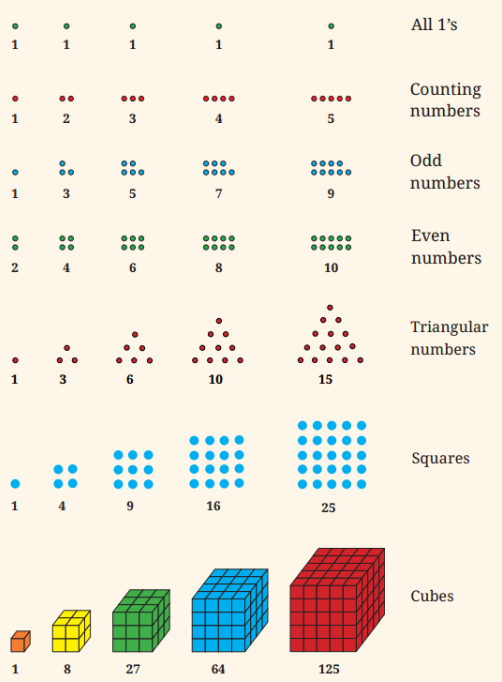
Q5. Copy the pictorial representations of the number sequences in Table 2 in your notebook, and draw the next picture for each sequence!
Answer:
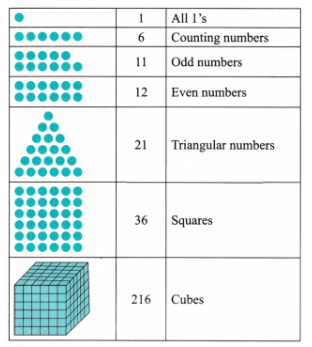
| Next picture | Next number | Sequence type |
|---|---|---|
| A single dot | 1 | All 1's |
| 6 dots in a line | 6 | Counting numbers |
| 11 dots | 11 | Odd numbers |
| 12 dots | 12 | Even numbers |
| A triangle of dots | 21 | Triangular numbers |
| A 6 × 6 square of dots | 36 | Squares |
| A cube made of 6 × 6 × 6 smaller cubes | 216 | Cubes |
Q6. Why are 1, 3, 6, 10, 15, … called triangular numbers? Why are 1, 4, 9, 16, 25, … called square numbers or squares? Why are 1, 8, 27, 64, 125, … called cubes?
Answer:
The numbers 1, 3, 6, 10, 15, … are called triangular numbers because they can be represented by triangular arrangements of dots.
The numbers 1, 4, 9, 16, 25, … are called square numbers or squares because they can be represented by square arrangements of dots.
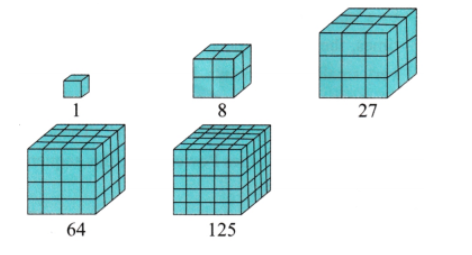
The numbers 1, 8, 27, 64, 125, … are called cubes, because they can be arranged in the form of cubes of unit blocks.
Q7. You will have noticed that 36 is both a triangular number and a square number! That is, 36 dots can be arranged perfectly both in a triangle and in a square. Make pictures in your notebook illustrating this! This shows that the same number can be represented differently, and play different roles, depending on the context. Try representing some other numbers pictorially in different ways!
Answer:
36 as a triangular number:

36 as a square number:

In the same way, number 9 can be represented in different ways as:

Similarly, number 10 can be represented as a rectangle and a triangle by arranging dots, as:
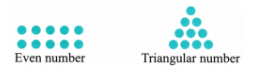
There are many more numbers that can be represented in different ways.
Q8. What would you call the following sequence of numbers?
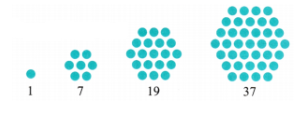
That's right, they are called hexagonal numbers! Draw these in your notebook. What is the next number in the sequence?
Answer:
We know that 1, 7, 19, 37 are hexagonal numbers as they follow a pattern. As
1
1 + 6 = 7
7 + 12 = 19
19 + 18 = 37
37 + 24 = 61
So, the next hexagonal number in the sequence is 61.
It can be represented as:

Q9. Can you think of pictorial ways to visualise the sequence of Powers of 2? Powers of 3? Here is one possible way of thinking about Powers of 2:
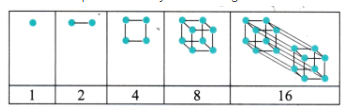
Answer:
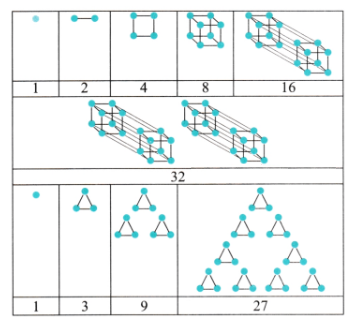
1.4 Relations Among Number Sequences – Figure it Out (Pages 8–9)
Q10. Can you find a similar pictorial explanation for why adding counting numbers up and down, i.e., 1, 1 + 2 + 1, 1 + 2 + 3 + 2 + 1, …, gives square numbers?
Answer:
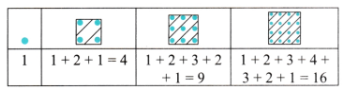
Q11. By imagining a large version of your picture, or drawing it partially, as needed, can you see what will be the value of 1 + 2 + 3 + … + 99 + 100 + 99 + … + 3 + 2 + 1?
Answer:
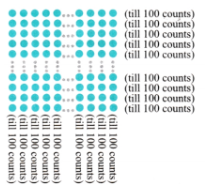
1 + 2 + 3 + … + 99 + 100 + 99 + … + 3 + 2 + 1 = 10000
Q12. Which sequence do you get when you start to add the All 1's sequence up? What sequence do you get when you add the All 1's sequence up and down?
Answer:
When we add all 1's sequence up, we get the counting numbers, as
1 = 1
1 + 1 = 2
1 + 1 + 1 = 3
1 + 1 + 1 + 1 = 4, …
When we add all 1's sequence up and down, we get counting numbers depends upon the number of times 1 occurs.
Q13. Which sequence do you get when you start to add the Counting numbers up? Can you give a smaller pictorial explanation?
Answer:
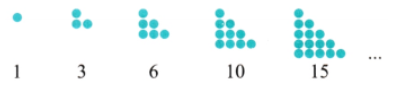
We get the triangular numbers.
1, 1 + 2 = 3, 1 + 2 + 3 = 6, 1 + 2 + 3 + 4 = 10, 1 + 2 + 3 + 4 + 5 = 15, …
Pictorial representation of counting numbers up:
Q14. What happens when you add up pairs of consecutive triangular numbers? That is, take 1 + 3, 3 + 6, 6 + 10, 10 + 15, …? Which sequence do you get? Why? Can you explain it with a picture?
Answer:
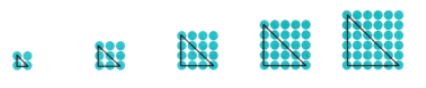
After adding up pairs of consecutive triangular numbers, we get square numbers.
As 1 + 3 = 4, 3 + 6 = 9, 6 + 10 = 16, 10 + 15 = 25, 15 + 21 = 36, …
Pictorial representation of the sequence:
Q15. What happens when you start to add up powers of 2 starting with 1, i.e., take 1, 1 + 2, 1 + 2 + 4, 1 + 2 + 4 + 8, …? Now add 1 to each of these numbers — what numbers do you get? Why does this happen?
Answer:
On adding up powers of 2 starting with 1, as
1, 1 + 2 = 3, 1 + 2 + 4 = 7, 1 + 2 + 4 + 8 = 15, … we get a sequence like,
1 = 1, 1 × 2 + 1 = 3, 3 × 2 + 1 = 7, 7 × 2 + 1 = 15, 15 × 2 + 1 = 31, …
Further adding up 1 to each number of the sequence obtained,
1 + 1 = 2, 3 + 1 = 4, 7 + 1 = 8, 15 + 1 = 16
Clearly, we get a number sequence of powers of 2.
As, 2, 4, 8, 16, ….
Q16. What happens when you multiply the triangular numbers by 6 and add 1? Which sequence do you get? Can you explain it with a picture?
Answer:
The triangular numbers are 1, 3, 6, 10, 15, 21, …
After multiplying with 6 and adding 1, we get,
1 × 6 + 1 = 7, 3 × 6 + 1 = 19, 6 × 6 + 1 = 37, 10 × 6 + 1 = 61, 15 × 6 + 1 = 91, …
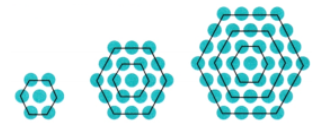
These are hexagonal numbers.
Pictorial representation of hexagonal numbers:
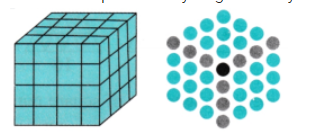
Q17. What happens when you start to add up hexagonal numbers, i.e., take 1, 1 + 7, 1 + 7 + 19, 1 + 7 + 19 + 37, …? Which sequence do you get? Can you explain it using a picture of a cube?
Answer:
Adding hexagonal numbers, we get
1, 1 + 7 = 8, 1 + 7 + 19 = 27, 1 + 7 + 19 + 37 = 64, …
Clearly, we get 1, 8, 27, 64, 125, …
It is the sequence of cubes.
Pictorial representation:
1.5 Patterns in Shapes – Figure it Out (Page 11)

Q18. Can you recognise the pattern in each of the sequences in Table 3?
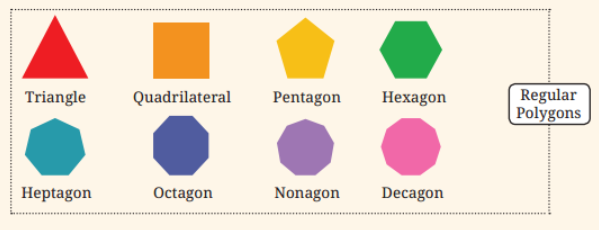
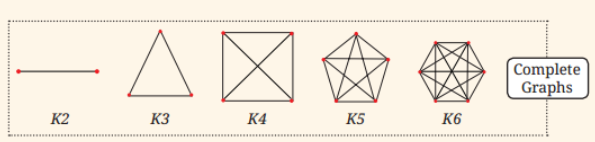
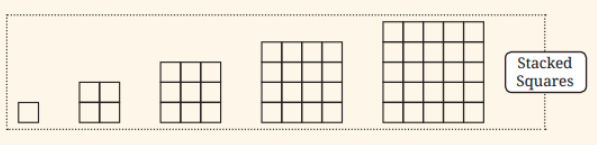
Examples of shape sequences:
Answer:
Regular polygon: In the sequence, the next polygon is obtained by increasing the number of sides by 1.
Complete Graph: In the sequence, the next shape is obtained by increasing the number of vertices by 1.
Stacked Squares: In the sequence, the next bigger square is representing the square numbers.
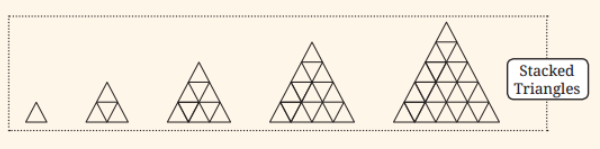
Stacked Triangles: In the sequence, the next bigger triangle is representing the sum of consecutive odd numbers starting from 1.
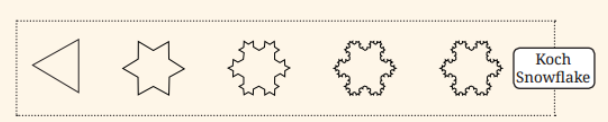
Koch Snowflake: In the sequence, each time each line segment ' – ' is replaced by a speed bump:

As one does this more and more times, the changes become tinier and tinier with very-very small line segments.
Q19. Try and redraw each sequence in Table 3 in your notebook. Can you draw the next shape in each sequence? Why or why not? After each sequence, describe in your own words what is the rule or pattern for forming the shapes in the sequence.
Answer:
(A) Regular Polygons:

Next shape: 11-sided polygon (Undecagon)
Rule/Pattern: Each new shape increases the number of sides by 1.
(B) Complete graphs:

Next shape: K₇, which consists of 7 points, each joined to every other point.
Rule/pattern: Each shape adds one new vertex each time and connects new vertices to the existing vertices.
(C) Stacked squares:

Next shape: 6×6 square grid.
Rule/pattern: Each step increases the grid size by one row and one column.
(D) Stacked triangles:

Next shape: Triangle with one more row.
Rule/pattern: Each step adds a new row at the bottom.
(E) Koch Snowflakes:

Next shape: A more complex snowflake with smaller triangular “bumps” added on every side.
Rule/pattern: Each shape is made by adding small triangular bumps to every side of an equilateral triangle. As this is done more and more times, the changes become tinier and tinier with very small line segments. So, exact drawing becomes impractical after a few steps
1.6 Relation of Shapes to Number Sequences – Figure it Out (Pages 11–12)
Q20. Count the number of sides in each shape in the sequence of Regular Polygons. Which number sequence do you get? What about the number of corners in each shape in the sequence of Regular Polygons? Do you get the same number sequence? Can you explain why this happens?
Answer:
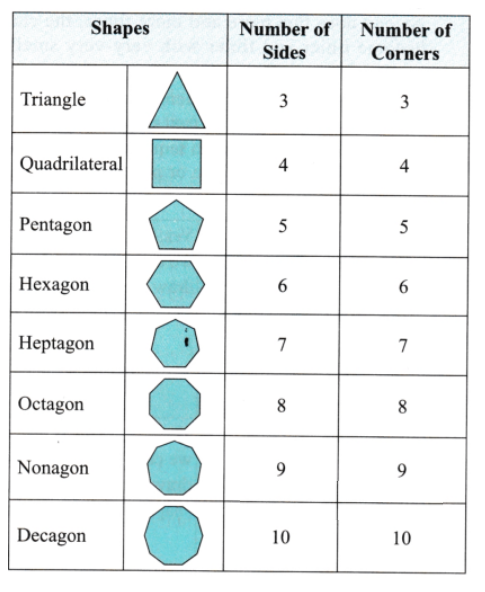
The number sequence we get is 3, 4, 5, 6, 7, 8, 9, 10, i.e., the counting numbers starting from 3, in both cases: number of sides and number of corners.
This happens as the number of corners depends upon the number of sides.
Q21. Count the number of lines in each shape in the sequence of Complete Graphs. Which number sequence do you get? Can you explain why?
Answer:
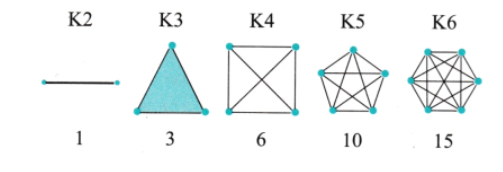
After counting the number of lines on each shape in the sequence, we get
1, 3, 6, 10, 15, 21, …
It is the sequence of triangular numbers because each term of the sequence obtained is the sum of n consecutive numbers.
Q22. How many little squares are there in each shape of the sequence of Stacked Squares? Which number sequence does this give? Can you explain why?
Answer:
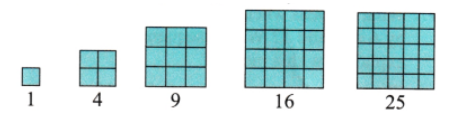
Clearly, we get a sequence of square numbers 1, 4, 9, 16, 25, … Because we count the number of little squares in each shape and get each one is the product of a counting number by itself.
Q23. How many little triangles are there in each shape of the sequence of Stacked Triangles? Which number sequence does this give? Can you explain why?
Answer:
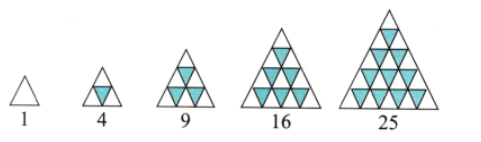
Clearly, we get a sequence of square numbers, 1, 4, 9, 16, 25, … which are obtained by adding the number of small triangles in each row.
That is, 1, 1 + 3 = 4, 1 + 3 + 5 = 9, 1 + 3 + 5 + 7 = 16, …
Q24. To get from one shape to the next shape in the Koch Snowflake sequence, one replaces each line segment '—' by a 'speed bump'

Answer:
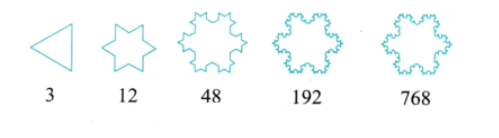
By counting line segments, we get the number sequence: 3,12,48,192,768,…
In the sequence, each term is thrice of power of 4 , as
3×1 = 3
3×4 = 12
3×(4×4) = 48
3×(4×4×4) = 192
Related Links
- Chapter 2 Lines and Angles
- Chapter 3 Number Play
- Chapter 4 Data Handling and Presentation
- Chapter 5 Prime Time
- Chapter 6 Perimeter and Area
- Chapter 7 Fractions
- Chapter 8 Playing with Constructions
- Chapter 9 Symmetry
- Chapter 10 The Other Side of Zero