NCERT Solutions for Class 8 Maths Chapter 9 – Mensuration Ex 9.3
NCERT Solutions for Class 8 Maths Chapter 9 – Mensuration Ex 9.3 are given here in simple, step-by-step form. NCERT stands for National Council of Educational Research and Training, the body that makes your textbook. Exercise 9.1 was about area and Exercise 9.2 about surface area. Exercise 9.3 is about volume. Volume is the amount of space a solid takes up, and capacity is how much a container can hold. This exercise covers the cuboid, the cube and the cylinder.
This exercise has 8 questions. They are based on real objects, such as a matchbox, a water tank, a cylindrical drum, and containers that hold milk or water. You will also change between millilitres, litres and cubic centimetres. Every question below is solved in short steps, with the final answer in bold. Students can use this page for homework and revision, parents can use it to check the work at home, and teachers can use it in class. A free printable PDF of these solutions is also available for offline study.
NCERT Solutions for Class 8 Maths Chapter 9 – Mensuration Ex 9.3
 Mensuration
 Easy
Easy
 Mensuration
Easy
Mensuration
Easy
Mensuration
Mensuration
Easy
Mensuration
Easy
Mensuration
 Medium
 Mensuration
Medium
Mensuration
Medium
 Mensuration
Easy
Mensuration
Easy
Mensuration
Mensuration
Easy
Mensuration
Easy
Mensuration
 Difficult
 Mensuration
Easy
Mensuration
Easy
 Mensuration
Easy
Mensuration
Difficult
Mensuration
Medium
Mensuration
Medium
Mensuration
Easy
Mensuration
Difficult
Mensuration
Medium
Mensuration
Medium
 Mensuration
Medium
Mensuration
Medium

Volume Formulas and Units
- Cuboid: Volume = length × breadth × height = l × b × h.
- Cube (side a): Volume = a3.
- Cylinder (radius r, height h): Volume = πr2h.
- Take π as 22/7 when the radius is a multiple of 7, otherwise use 3.14.
- Unit changes: 1 litre = 1000 mL, 1 cm3 = 1 mL, so 1 litre = 1000 cm3. Also 1 m3 = 10,00,000 cm3 = 1000 litres.
Exercise 9.3 – Questions and Answers
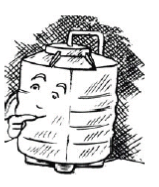
Q1. Given a cylindrical tank, in which situation will you find surface area and in which situation volume?
(a) To find how much it can hold.
(b) Number of cement bags required to plaster it.
(c) To find the number of smaller tanks that can be filled with water from it.
Answer:
(a) We will find the volume, because how much a tank can hold is its capacity, which is the space inside it.
(b) We will find the surface area, because plastering is done on the outer covering of the tank.
(c) We will find the volume, because we need to compare the water the big tank holds with the water a smaller tank holds.
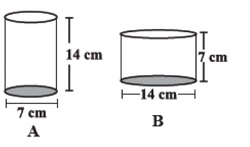
Q2. Diameter of cylinder A is 7 cm, and the height is 14 cm. Diameter of cylinder B is 14 cm and height is 7 cm. Without doing any calculations can you suggest whose volume is greater? Verify it by finding the volume of both the cylinders. Check whether the cylinder with greater volume also has greater surface area.
Answer:
The heights and diameters of these cylinders A and B are interchanged.
If the measures of 'r' and 'h' are same, then the cylinder with the greater radius will have the greater volume, because in the formula the radius is squared but the height is not.
Radius of cylinder A = 7/2 cm
Radius of cylinder B = 14/2 cm = 7 cm
As the radius of cylinder B is greater, therefore, the volume of cylinder B will be greater.
Let us verify it by calculating the volume of both the cylinders.
Volume of cylinder A = πr²h
= (22/7 × 7/2 × 7/2 × 14) cm³
= 539 cm³
Volume of cylinder B = πr²h
= (22/7 × 7 × 7 × 7) cm³
= 1078 cm³
Hence, the volume of cylinder B is greater.
Now for the surface areas:
Surface area of cylinder A = 2πr(h + r)
= [2 × 22/7 × 7/2 × (7/2 + 14)] cm²
= [22 × (7 + 28)/2] cm²
= [22 × 35/2] cm²
= 385 cm²
Surface area of cylinder B = 2πr(h + r)
= [2 × 22/7 × 7 × (7 + 7)] cm²
= [44 × 14] cm²
= 616 cm²
Thus, the surface area of cylinder B is also greater than the surface area of cylinder A.
Q3. Find the height of a cuboid whose base area is 180 cm² and volume is 900 cm³.
Answer:
Base area of the cuboid = 180 cm²
⇒ Length × Breadth = 180 cm²
Volume of cuboid = Length × Breadth × Height
⇒ 900 cm³ = 180 cm² × Height
⇒ Height = 900/180
= 5 cm
Thus, the height of the cuboid is 5 cm.
Q4. A cuboid is of dimensions 60 cm × 54 cm × 30 cm. How many small cubes with side 6 cm can be placed in the given cuboid?
Answer:
Volume of cuboid = 60 cm × 54 cm × 30 cm = 97200 cm³
Side of the cube = 6 cm
Volume of the cube = (6)³ cm³ = 216 cm³
Required number of cubes = Volume of the cuboid / Volume of the cube
= 97200 cm³ / 216 cm³
= 450
∴ 450 cubes can be placed in the given cuboid.
Q5. Find the height of the cylinder whose volume is 1.54 m³ and diameter of the base is 140 cm.
Answer:
Given,
Volume of cylinder = 1.54 m³
Diameter of the base = 140 cm
⇒ Radius of the base = (140/2) cm = 70 cm = 70/100 m
Volume of cylinder = πr²h
1.54 m³ = 22/7 × 70/100 × 70/100 × h
⇒ h = (1.54 × 100) / (22 × 7) m
= 154/154 m
= 1 m
Thus, the height of the cylinder is 1 m.
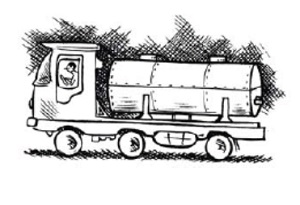
Q6. A milk tank is in the form of a cylinder whose radius is 1.5 m and length is 7 m. Find the quantity of milk in litres that can be stored in the tank.
Answer:
Radius of cylinder = 1.5 m
Length of cylinder = 7 m
Volume of cylinder = πr²h
= 22/7 × 1.5 × 1.5 × 7
= 49.5 m³
We know that, 1 m³ = 1000 L
∴ The quantity of milk in litres = (49.5 × 1000) L
= 49500 L
Therefore, 49500 L of milk can be stored in the tank.
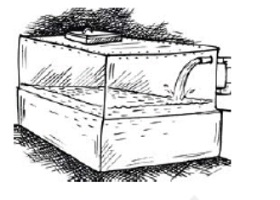
Q7. Water is pouring into a cuboidal reservoir at the rate of 60 litres per minute. If the volume of reservoir is 108 m³, find the number of hours it will take to fill the reservoir.
Answer:
Volume of cuboidal reservoir = 108 m³
= (108 × 1000) L
= 108000 L
It is given that water is being poured at the rate of 60 L per minute.
i.e. (60 × 60) L = 3600 L per hour
Required number of hours = 108000 / 3600
= 30 hours
∴ It will take 30 hours to fill the reservoir.